
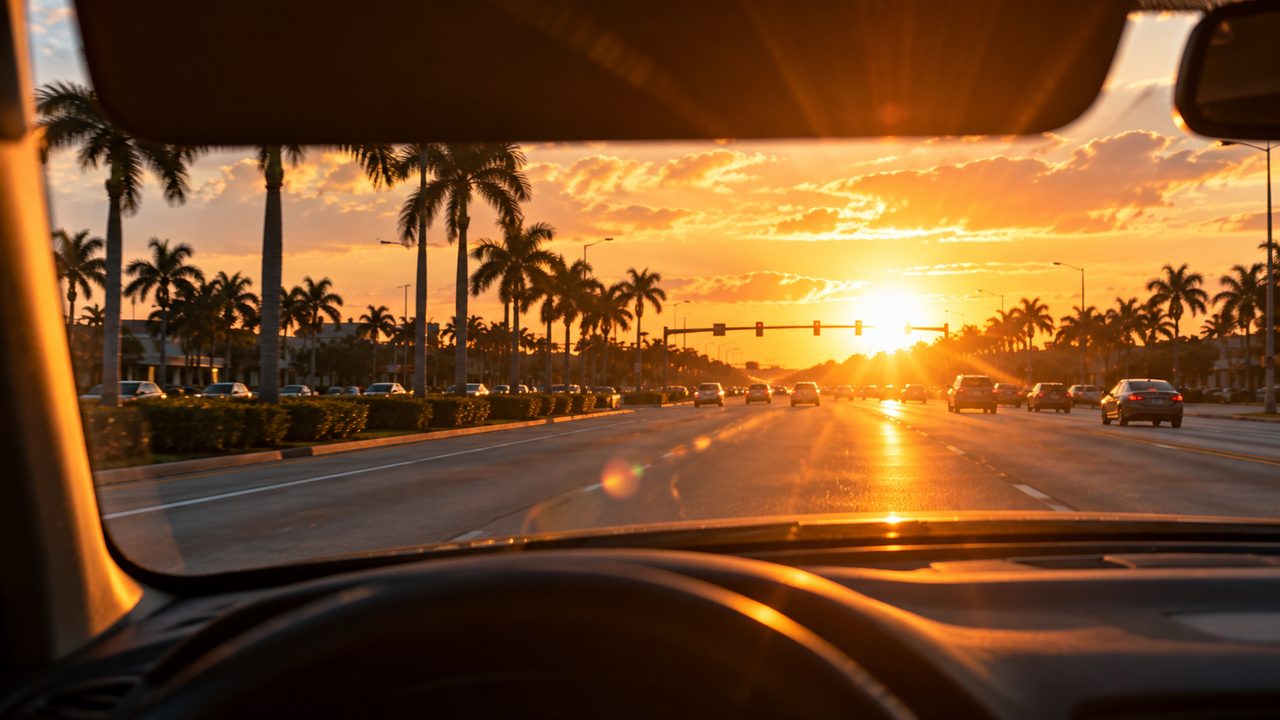
TL;DR: In a Florida sun glare car accident, the blinded driver is usually still responsible, because state law expects drivers to slow down when they can’t see clearly.
A sun glare car accident in Florida happens when a driver is partly or fully blinded by a low sun and hits another car, a cyclist, or a pedestrian. It’s one of the most common explanations drivers give after a crash, and it’s also one of the weakest.
Florida law expects every driver to adjust to the conditions in front of them, and a sun that rises and sets on a predictable schedule is about as foreseeable as a road hazard gets. If you were hurt by a driver who says the sun was in their eyes, here’s how that excuse holds up and what matters for your claim.
Why Glare Crashes Are So Common in South Florida
South Florida’s road grid runs largely east and west, which lines drivers up with the sun at the worst times of day. Glades Road, Palmetto Park Road, and Yamato Road in Boca Raton, Atlantic Avenue in Delray Beach, and Boynton Beach Boulevard all point drivers straight into a rising sun in the morning and a setting sun in the evening.
The problem gets worse this time of year. From fall through winter, the sun sits lower in the sky for more of the day. Once daylight saving time ends on November 1, the evening commute shifts right into sunset, so many drivers heading home on westbound roads are staring into the glare for the whole trip.
Intersections Carry the Highest Risk
Glare is most dangerous where drivers have to see something small or quick. A driver turning left from an east-west road onto Federal Highway may miss an oncoming motorcycle hidden in the sun. A driver looking into a low sun can lose sight of a traffic signal entirely, or miss a pedestrian stepping off the curb near a crosswalk.
Rear-end crashes are common too. When the car ahead brakes suddenly and the driver behind can’t see its brake lights through the glare, the result is a collision that the following driver could have avoided by leaving more space.

What Florida Law Expects of a Driver Facing Glare
Florida’s traffic code is direct about this. Under Florida’s unlawful speed statute, no one may drive faster than is reasonable and prudent for the conditions and the hazards that exist. The same law says drivers must slow down when a special hazard exists because of weather or highway conditions.
In plain terms, a driver who can’t see well is expected to slow down, leave more room, use the visor, and stop if needed. Keeping the same speed while effectively driving blind isn’t a reasonable choice. That’s why “I didn’t see them” often works against the driver who says it, because it can amount to an admission they weren’t driving safely for what they could see.
Why the “Sudden Emergency” Argument Rarely Works
Insurers sometimes try to frame glare as a sudden emergency, a legal idea that can excuse a driver who faces an unexpected danger they didn’t create. The trouble is that sun glare is rarely unexpected. The sun comes up and goes down on a schedule, and anyone who drives a road regularly knows when it becomes blinding.
A surprise, such as a flash of glare off a building that no one could have predicted, might be argued differently. But for the typical sunrise or sunset crash on a familiar road, the argument usually has little footing, because the hazard was known before the driver ever turned the key.
How Fault Gets Sorted in a Glare Crash
Florida uses a modified comparative fault system. If you’re found more than 50 percent responsible for your own injuries, you generally can’t recover damages. At 50 percent or less, you can still recover, reduced by your share of the fault.
This is where glare cases can get contested. An insurer may argue that you also had the sun in your eyes, or that you stopped too suddenly, or that you were walking outside a crosswalk. Picture a cyclist riding west on Palmetto Park Road at 6:30 p.m. who is struck from behind by a driver facing the same sunset. The driver’s insurer may point to the bike’s lighting or position, while the core question stays the same: did the driver slow down enough to see what was ahead?
Rear-End Crashes Have Their Own Rule
In Florida, the driver who rear-ends another vehicle is generally presumed to be at fault. That presumption can be challenged with evidence, but glare alone usually isn’t enough to overcome it, because leaving extra distance is exactly what a careful driver does when visibility drops. If you were hit from behind by someone blaming the sun, that presumption often works in your favor.
Evidence That Matters After a Sun Glare Crash
Glare cases depend on showing exactly what the driver faced, and that evidence fades quickly.
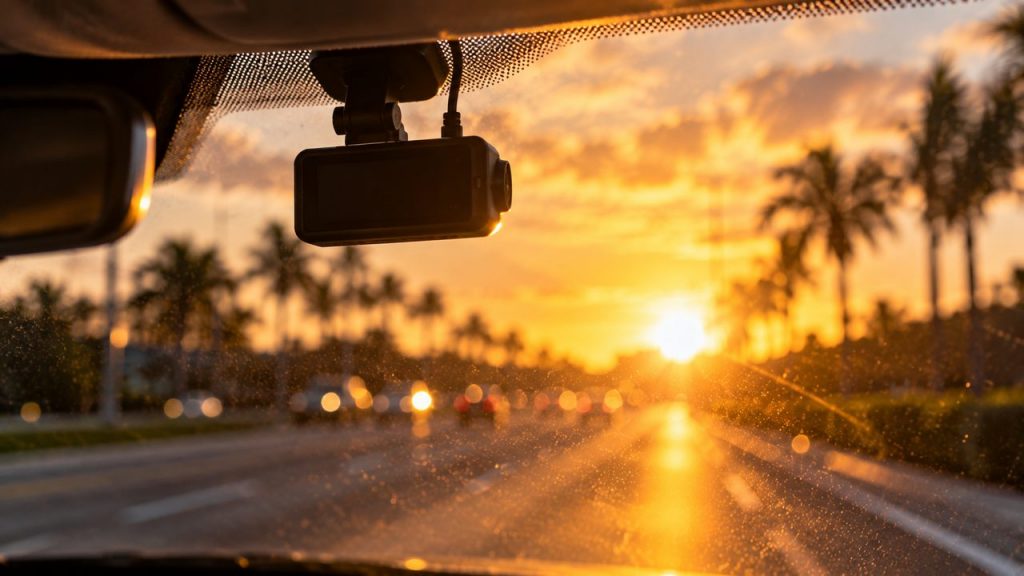
The time of the crash is the starting point, because sun position can be calculated for any date, time, and location. Photos of the scene taken at the same time of day, the direction each vehicle was traveling, and whether a traffic signal or crosswalk was visible all help rebuild what happened. Dashcam footage, nearby business cameras, and traffic cameras can show how fast the driver was going and whether they slowed down at all.
The condition of the at-fault driver’s car can matter as well. A dirty or cracked windshield scatters sunlight and makes glare far worse, and that is a problem the driver was responsible for fixing. Witness statements about the driver’s speed or failure to brake add useful support.
What to Do After Being Hit by a Driver Who Blames the Sun
Your health comes first. Get checked by a doctor promptly, since Florida’s no-fault rules generally require treatment within 14 days to use your personal injury protection benefits. Even soreness that seems minor can be worth documenting early.
At the scene, if you’re able, note the time, take photos facing the direction the other driver was traveling, and write down anything the driver said about the sun. “I couldn’t see anything” is a statement worth remembering. Ask for the police report number, and be careful about giving a recorded statement to the other driver’s insurer before you understand your rights.
Florida now allows two years from the date of the crash to file most negligence lawsuits, but camera footage is often overwritten in days or weeks. Our car accident team handles crashes across Palm Beach and Broward counties, and reaching out early gives someone time to request that footage before it’s gone.
Getting Help With a Glare-Related Claim
When an insurer tells you the sun caused your crash, it’s worth getting a second opinion before you accept that explanation. The law focuses on what the driver did in response to the glare, and in most cases the answer is simply “not enough.” Talking with experienced Boca Raton car accident attorneys can help you understand how fault is likely to be viewed in your situation, though every claim depends on its own facts and no outcome is guaranteed.
If you were injured by a driver who says they didn’t see you, you can schedule a free consultation to go over what happened and what evidence may still be available.
Frequently Asked Questions
Is sun glare a valid defense in a Florida car accident?
Rarely. Florida law requires drivers to slow down when conditions limit what they can see, and glare at sunrise or sunset is predictable. A driver who keeps going at normal speed while blinded is usually still considered negligent, although fault can be shared depending on the facts.
Who is at fault in a sun glare car accident in Florida?
Usually the driver who couldn’t see and failed to adjust. Florida’s comparative fault system can divide responsibility if another driver, cyclist, or pedestrian also acted carelessly. If you’re found more than 50 percent at fault, you generally can’t recover, and your recovery is reduced by any share assigned to you.
Does the sudden emergency doctrine apply to sun glare?
It seldom applies. The doctrine can excuse a driver who faced an unexpected danger they didn’t create, but sunrise and sunset glare are foreseeable, especially on roads the driver uses regularly. Insurers raise it anyway, so it’s worth understanding why it usually doesn’t fit a typical glare crash.
What if I was rear-ended by a driver blinded by the sun?
In Florida, the rear driver is generally presumed at fault in a rear-end crash. That presumption can be challenged, but glare alone often isn’t enough, because a careful driver leaves more space when visibility drops. Evidence like camera footage and scene photos helps support your side of the claim.
What evidence helps prove a sun glare crash case?
The exact time and location of the crash, which allow sun position to be calculated, are the starting point. Scene photos, the direction of travel, camera footage, witness accounts, the police report, and the condition of the other driver’s windshield can all show whether the driver adjusted to the glare.
How long do I have to file a claim after a Florida sun glare crash?
Florida generally allows two years from the crash date to file a negligence lawsuit, and insurance claims should be reported much sooner. Camera footage and other evidence can disappear within days, so starting early matters. You also typically need medical care within 14 days to use PIP benefits.