
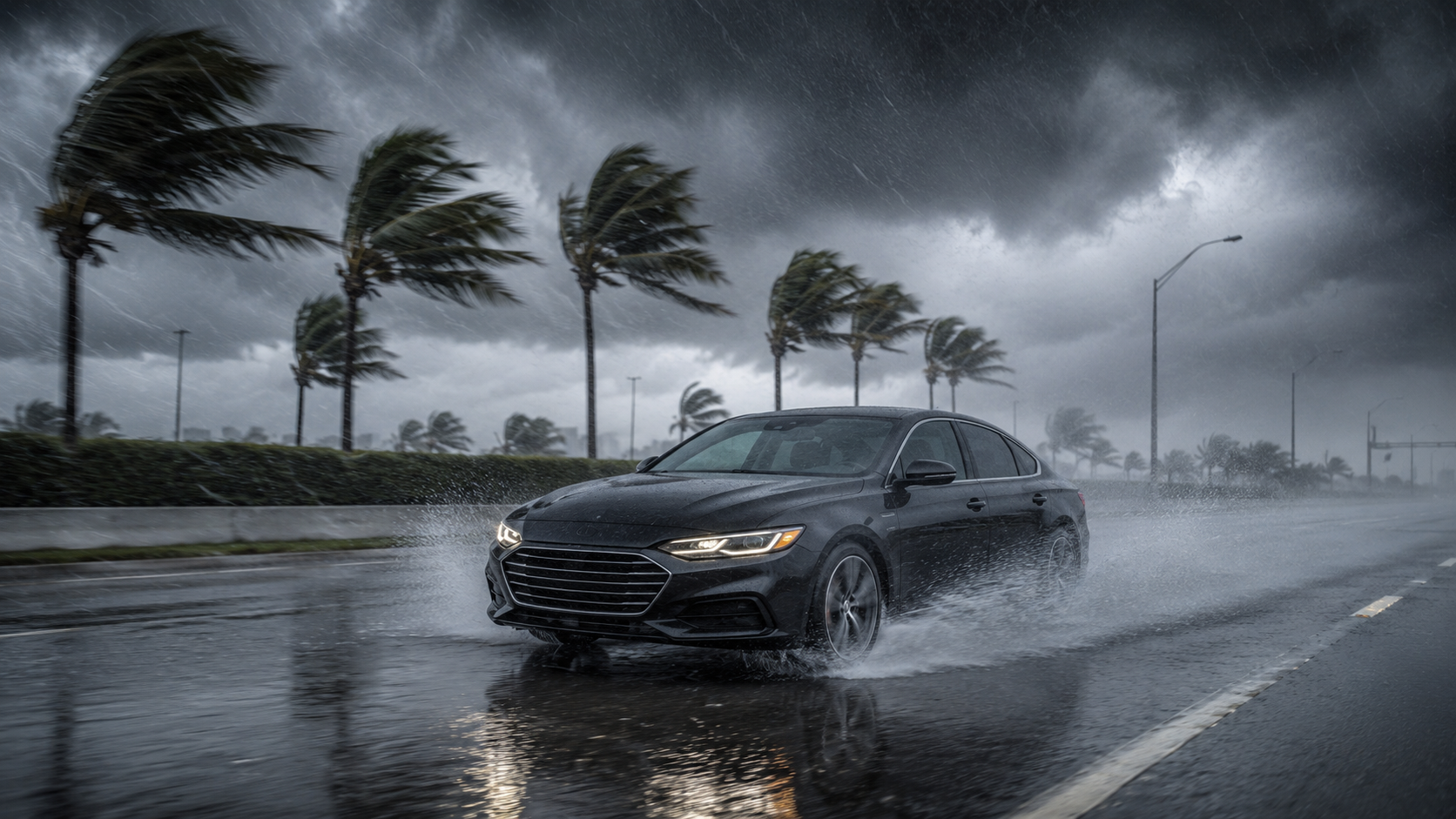
TL;DR: Hurricane car accident liability in Florida rarely disappears just because it was storming. Drivers still owe a duty of reasonable care, and weather is only a partial defense in narrow situations.
Hurricane season puts a familiar argument on the table after any crash in bad weather: the storm did it, not the driver. Florida law treats that claim with real skepticism. Rain, wind, and flooding change what counts as reasonable driving, but they almost never erase a driver’s duty to operate a vehicle safely for the conditions. Understanding when weather actually shifts fault, and when it is just an excuse an insurer hopes you will accept, matters a great deal if you were hurt on a South Florida road during a storm. This guide walks through how fault works when a hurricane or tropical system is part of the picture, and where the “the weather caused it” defense tends to fall apart.
Why “It Was the Weather” Usually Fails as a Complete Defense
Florida drivers are held to a standard of reasonable care under the circumstances, and storms are part of those circumstances rather than an exception to them. When rain reduces visibility and roads flood, the reasonable response is to slow down, increase following distance, and sometimes stay off the road entirely. A driver who keeps moving at highway speed through sheeting rain has not been excused by the weather; that driver has arguably ignored what the weather demanded.
The good news for injured people is that this framing tends to favor them. Bad conditions raise the bar for careful driving instead of lowering it. Someone who rear-ends you on a flooded stretch of Glades Road cannot simply point at the sky. The question a claim turns on is whether that driver adjusted the way a careful person would have, and hydroplaning into the car ahead is often evidence that they did not.
Insurers know this, which is why the weather excuse shows up so often in adjuster phone calls. Treat it as an opening position, not a legal conclusion. An experienced Boca Raton car accident attorney can push back on a fault assignment that leans on the storm while ignoring the driver’s own choices behind the wheel.
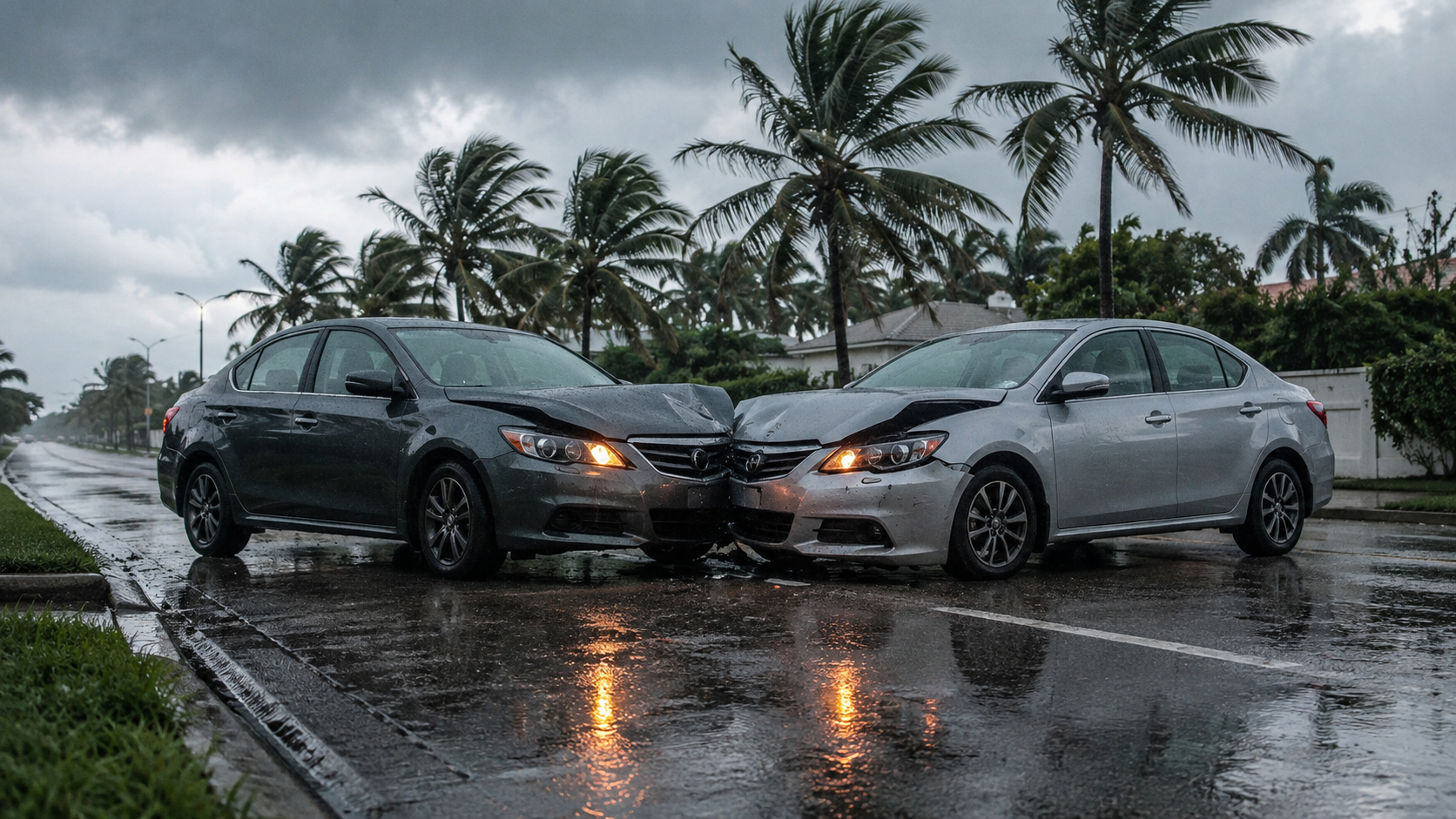
The Narrow Window Where Weather Genuinely Matters
Weather does have a real place in Florida accident law, and honesty about that helps you understand your own case. The doctrine most often raised is the “sudden emergency” rule. Under it, a driver who faces a sudden and unexpected situation that was not of their own making is judged by what a reasonable person would do in that emergency, not by hindsight. A tree limb that snaps and drops into a lane without warning, or a wind gust that shoves a high-profile vehicle sideways, can qualify.
The rule is narrower than it sounds, though. It does not apply if the driver helped create the emergency, and it does not apply to conditions a careful driver should have anticipated. A predicted tropical storm with named bands moving across Palm Beach County is not a surprise; it is on every phone and every broadcast for days. Standing water on a road that floods in every heavy rain is foreseeable to anyone who drives it. Courts and juries are reluctant to let a driver invoke “sudden emergency” for a hazard the whole region was warned about.
Foreseeable Versus Truly Unexpected
The dividing line usually comes down to foreseeability. Heavy rain during hurricane season is foreseeable. Reduced visibility at dusk in a downpour is foreseeable. Slick pavement after the first rain in weeks is foreseeable. A driver is expected to account for all of it. What might genuinely qualify as an unexpected emergency is rare: a sudden structural failure, a wind event that no reasonable preparation could address, or debris that appears with no time to react. Even then, the driver’s earlier choices, such as whether they should have been on the road at all, remain fair game.
How Fault Gets Sorted After a Storm Crash
Florida uses a comparative fault system, which means responsibility can be divided among more than one party. After a 2023 change to state law, an injured person who is found more than 50 percent at fault for their own harm generally cannot recover damages, while a person 50 percent or less at fault can still recover, reduced by their share. Weather often becomes the battleground for these percentages. An insurer may argue you share blame for driving in the storm, and your job, with help, is to show that the other driver’s specific conduct caused the crash.
This is where evidence does the heavy lifting. Dashcam video, the timing and severity of the weather, the posted and safe speeds for the conditions, skid or hydroplane marks, and the police report’s narrative all feed into who was reasonable and who was not. Documentation from the crash scene tends to matter more in weather cases than in clear-day collisions, precisely because both sides will argue about what the conditions required.
When More Than One Party May Share Responsibility
Storm crashes sometimes pull in defendants beyond the two drivers. A government entity that failed to address a known, chronic flooding hazard on a roadway can face questions, although claims against public bodies carry their own strict notice rules and limits. A property owner whose sign or debris blew into traffic could be implicated. Commercial trucking companies that sent drivers out against clear warnings may bear responsibility alongside the driver. Sorting through these possibilities is part of why our auto accident attorneys look past the obvious two-car framing in weather cases.
What Injured Drivers Should Do After a Hurricane-Season Crash
The steps after a storm crash mirror those after any Florida collision, with a few weather-specific additions. Get medical care promptly, both for your health and because Florida’s no-fault system ties personal injury protection benefits to seeing a provider within 14 days. Report the crash and get a police report even if roads are chaotic and response times are slow. If it is safe, photograph the standing water, the rain, the debris, and the position of the vehicles, because those conditions vanish quickly once the sun returns.
Be careful with recorded statements. An adjuster who calls while the storm is still fresh may steer you toward saying the weather was to blame, which quietly shifts fault onto conditions and away from the other driver. You are allowed to decline a recorded statement and speak with counsel first. The Florida Department of Highway Safety and Motor Vehicles offers practical guidance on driving in severe weather, and the reasonable-driver expectations it describes are the same expectations the law applies when deciding who was at fault.
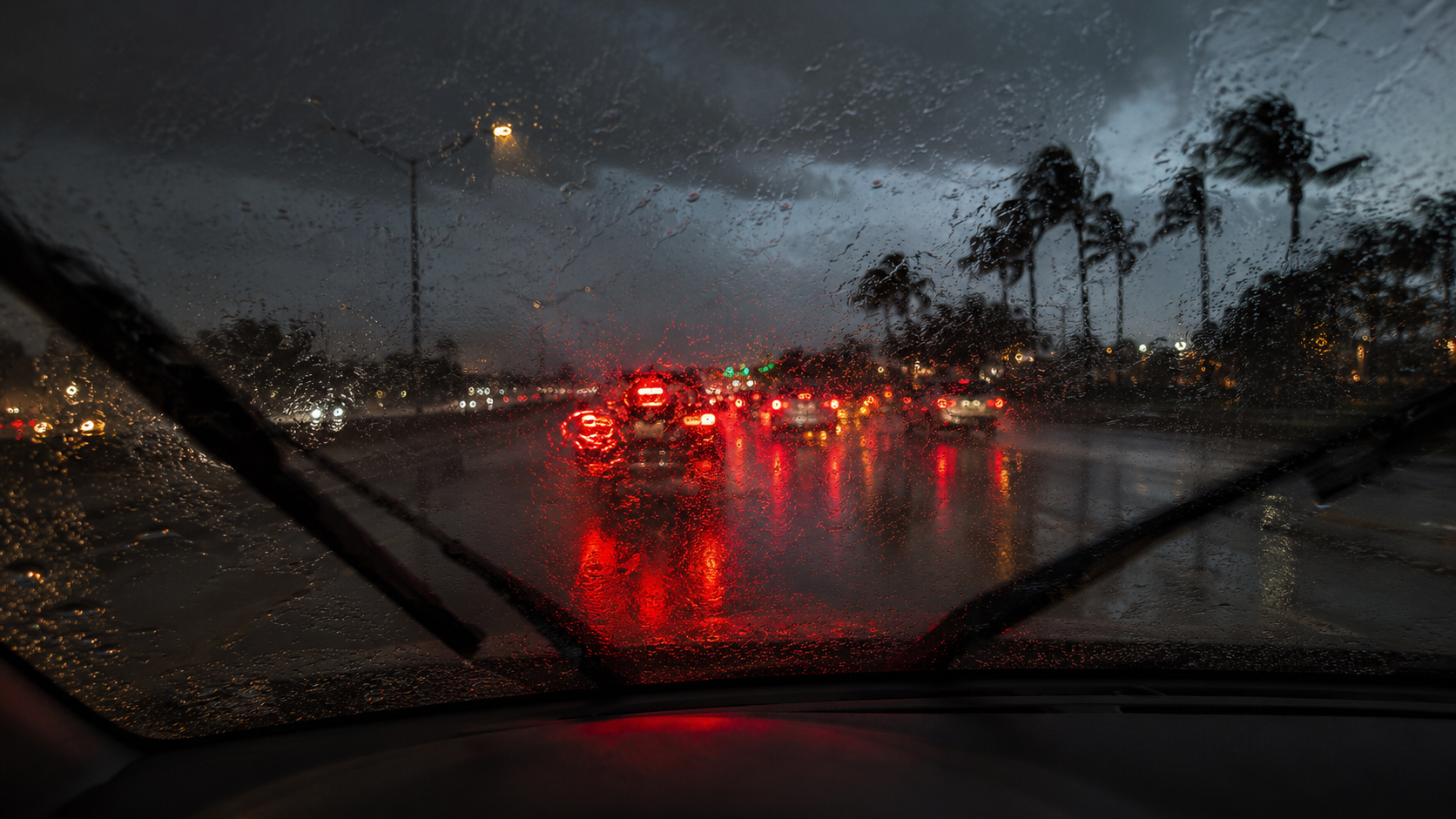
Where These Crashes Happen in South Florida
Hurricane-season crashes cluster in predictable places. Low-lying intersections that pond quickly, the on-ramps and merge points along I-95, and the coastal corridors where wind funnels between buildings all see spikes when systems move through. Drivers in Boca Raton, Delray Beach, and Boynton Beach face flooded underpasses and stalled-traffic pileups during the heaviest bands. Evacuation routes carry their own risk, with heavy volume, unfamiliar drivers, and fatigue combining in dangerous ways. None of these conditions automatically excuse a driver who causes a crash; if anything, a driver who chooses to be on a known problem road during a warned storm has a harder time claiming surprise.
Talk With a Lawyer Before You Accept a Weather Excuse
If an insurer is telling you the hurricane was to blame for your injuries, that is a reason to get a second opinion, not to close your file. Fault in Florida is about what the drivers did, measured against the conditions they faced, and the storm rarely tells the whole story. To understand your options after a weather-related crash, you can schedule a free case review and have someone look at the facts before you agree to anything.
Frequently Asked Questions
Can a driver avoid liability in Florida by blaming a hurricane?
Rarely. Florida drivers must use reasonable care for the conditions, and storms raise that standard rather than remove it. Weather can reduce a driver’s share of fault in narrow situations, but “it was the hurricane” is usually an insurer’s opening argument, not a complete legal defense that ends your claim.
What is the sudden emergency doctrine in Florida?
The sudden emergency doctrine judges a driver by what a reasonable person would do when facing a sudden, unexpected situation they did not create. It can apply to truly surprising hazards, but not to foreseeable storm conditions like heavy rain or known flooding, and not when the driver helped cause the emergency.
Am I partly at fault if I was driving during the storm?
Not automatically. Florida’s comparative fault system can assign you a share if your own choices contributed, but simply being on the road during rain does not make you liable. The focus stays on whether the other driver adjusted their speed, distance, and attention the way careful conditions required.
What evidence matters most in a weather-related crash?
Documentation of the conditions carries extra weight. Dashcam video, photos of standing water and debris, weather records for the time of the crash, skid or hydroplane marks, vehicle positions, and the police report all help show which driver acted unreasonably. Gathering this quickly matters because storm conditions disappear fast.
Should I give the insurance adjuster a recorded statement after a storm crash?
You are not required to, and it is wise to speak with counsel first. Adjusters may frame questions to pin the crash on the weather, which shifts fault toward conditions and away from the other driver. Declining a recorded statement while you get advice protects your ability to present the facts accurately.
Can more than one party be responsible for a hurricane-season crash?
Yes. Beyond the drivers, a trucking company that dispatched against warnings, a property owner whose debris entered the road, or a government body that ignored a chronic flooding hazard may share responsibility. Claims against public entities follow strict notice rules and caps, so reviewing every possible source of recovery early is important.