TL;DR: Florida school zone crosswalk law protects students on their way to class, and drivers who ignore reduced speeds or fail to yield can be held liable when a child is hurt.
Florida school zone crosswalk law sets the rules for how drivers must behave near schools, and those rules tighten sharply once the calendar flips to the start of a new academic year. Reduced speed limits, flashing beacons, crossing guards, and marked crosswalks all exist for one reason: children move unpredictably and cannot judge traffic the way adults do. When a driver blows through a school zone or fails to stop for a student in a crosswalk, the law generally places responsibility on that driver, and an injured child’s family may have a strong claim for the medical bills and lasting harm that follow.
The weeks around back-to-school season put more young pedestrians on Boca Raton streets than any other time of year. Parents walking kids to the corner, teenagers biking to the bus stop, and clusters of students crossing at the same intersection every morning all raise the stakes. Knowing how liability works before an accident happens helps you respond with clarity if the worst occurs.
How Florida school zone speed and crosswalk rules actually work
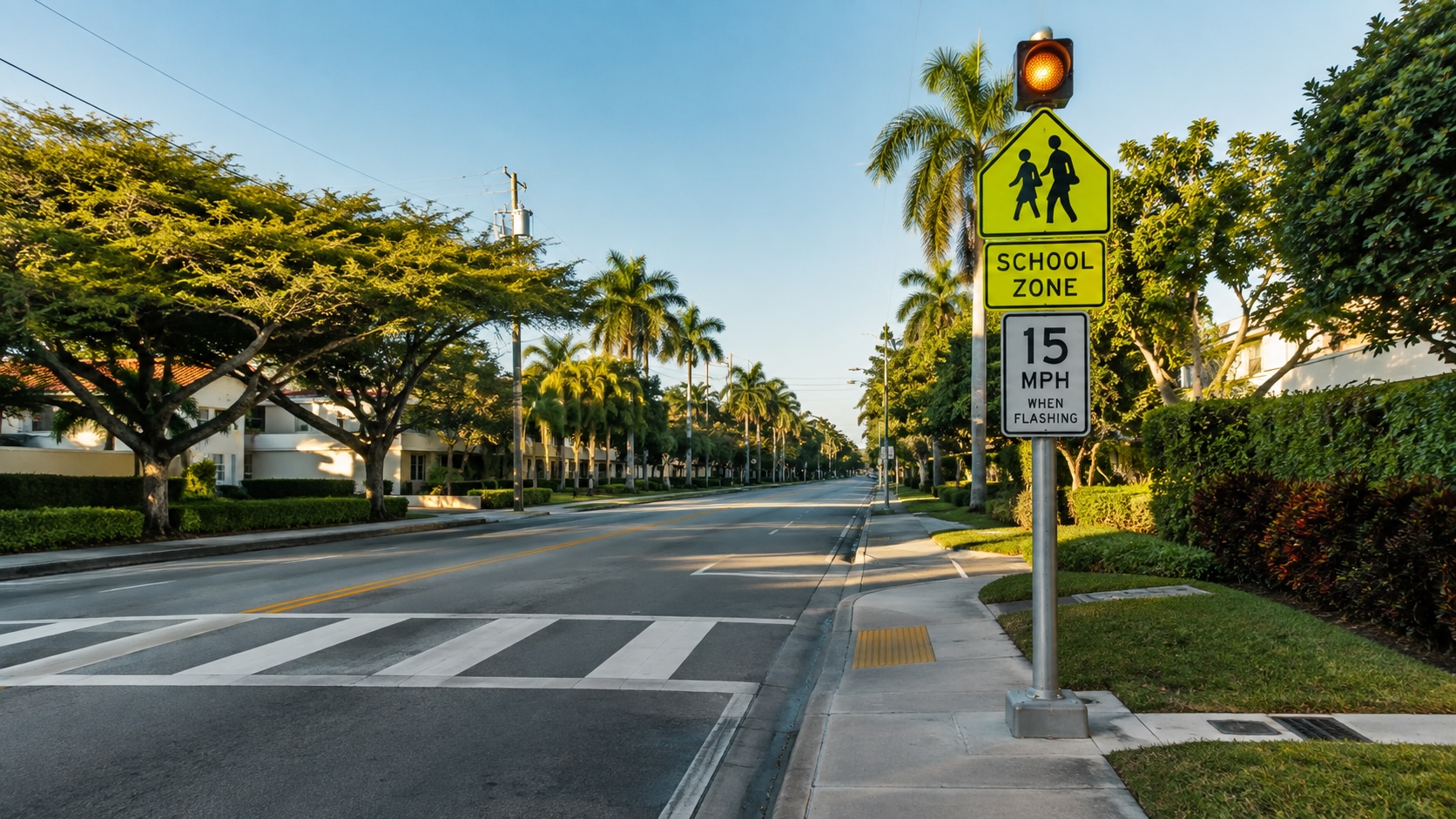
Florida requires the Department of Transportation to establish a uniform system of traffic control and pedestrian control devices around every school, public and private. That system is why you see the familiar reduced speed signs, the flashing yellow beacons, and the painted crosswalks that funnel students to safer crossing points. During posted hours, drivers must slow to the school zone speed limit, which is commonly 20 miles per hour or lower depending on the location. You can read the full framework in Florida Statutes section 316.1895, which governs how these zones are established and enforced.
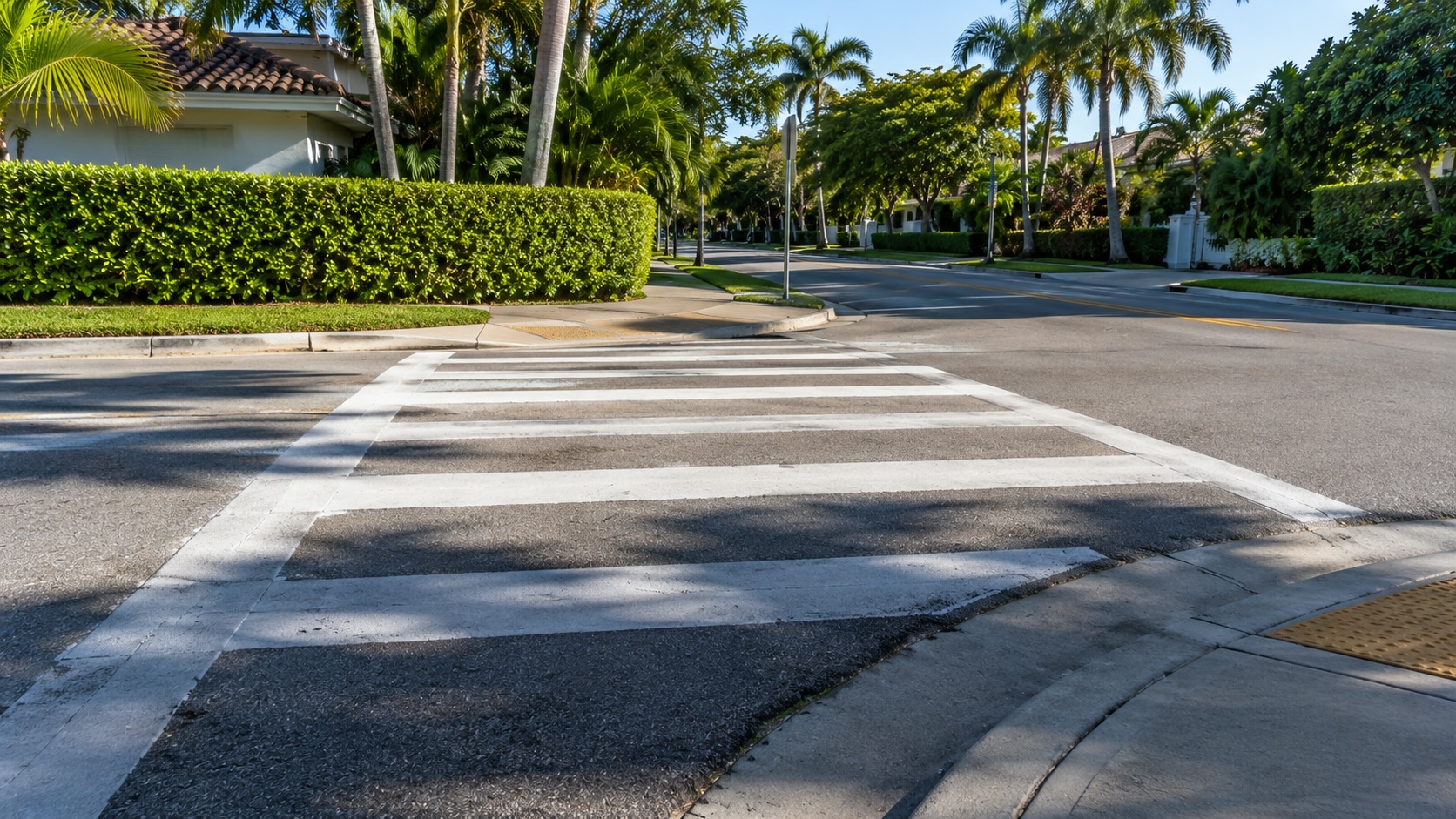
The crosswalk rules layer on top of the speed rules. A driver approaching a crosswalk must yield to a pedestrian who is crossing, and that duty exists whether the crosswalk is painted or simply the unmarked continuation of a sidewalk across an intersection. The good news for families is that these obligations are clear and well established, which makes them easier to point to when a driver claims they never saw the child.

What “yield” really requires from a driver
Yielding means more than tapping the brakes. Florida guidance from the state’s highway safety agency directs drivers to stop and stay stopped well back from the crosswalk so that other vehicles can also see and stop for the crossing pedestrian; you can review that guidance on the state’s pedestrian safety resource. A driver who rolls forward, edges into the crosswalk, or passes a vehicle that has already stopped for a student is creating exactly the danger these rules are meant to prevent. When that behavior injures a child, it becomes powerful evidence of negligence.
When a driver is liable for hitting a student
Liability in a pedestrian crash usually comes down to whether the driver acted reasonably under the circumstances. In a school zone, “reasonable” carries extra weight because the driver is on notice that children are present. A motorist who was speeding, distracted by a phone, or ignoring a crossing guard’s signal has fallen below the standard the law expects, and that failure typically supports a claim on behalf of the injured student.
Several fact patterns come up again and again in these cases. A driver running late and pushing through a zone at full speed. A turning vehicle that never checks the crosswalk before making a right on red. A car passing a stopped school bus or a stopped vehicle that had yielded to a child. Each of these scenarios involves a driver ignoring a duty that Florida law spells out plainly, and each strengthens the injured family’s position.
The role of crossing guards and school signage
Crossing guards carry real legal authority in the moment. When a guard steps into the roadway and signals traffic to stop, drivers must obey, and a driver who ignores that signal has committed a clear violation. Signage and flashing beacons work the same way; they establish the reduced speed and the heightened caution the driver was required to use. After a crash, these details help reconstruct exactly what the driver should have done and where they failed.
Comparative fault and the “darting child” defense
Insurers defending these claims often argue that the child darted into the road or crossed outside the crosswalk, hoping to shift blame onto the student. Florida uses a comparative negligence system, which means fault can be divided between the parties, and a driver’s insurer will try to assign as much of it to the child as possible. This is where a lot of families get caught off guard, because a young child is held to a very different standard than an adult.
Florida law recognizes that children cannot be expected to exercise the same judgment as grown adults. A five-year-old who runs after a ball is not evaluated the way a licensed driver is. Even when a student crossed midblock or stepped out unexpectedly, the driver’s duty to watch for children in a school zone does not disappear. A careful investigation into speed, sight lines, and reaction time often shows the driver had time to stop and simply was not paying attention.
What parents should do after a school zone crash
The moments after your child is struck are frightening, and clear steps help protect both their health and any future claim. Call 911 so that police and paramedics respond and a crash report is created. Get your child evaluated by a doctor even if injuries seem minor, because head and internal injuries in children are not always obvious at the scene. Photograph the crosswalk, the signage, the beacon, and the vehicle’s position if you safely can, and collect names and numbers from any crossing guard, teacher, or bystander who saw what happened.
Preserving this information early matters because school zone conditions change throughout the day. The flashing beacon that was active at 7:45 in the morning may be off by the time an adjuster visits. Documenting the scene while the details are fresh gives your family a much stronger foundation. If you are unsure about your next move, our personal injury claims team can walk you through what a case involving an injured student typically looks like.
Medical care and PIP for an injured child
Florida’s no-fault system means your own auto insurance personal injury protection often pays first for a pedestrian injury, even though your child was on foot rather than in a car. Personal injury protection generally covers a portion of medical bills up to the policy limit, and Florida’s 14-day rule requires initial care within two weeks of the crash to keep those benefits available. When injuries are serious enough to cross Florida’s threshold, a claim against the at-fault driver can pursue the remaining medical costs, future care, and the child’s pain and suffering.
Why these cases benefit from experienced representation
Cases involving injured children carry emotional weight and legal complexity that reward careful handling. Documenting a child’s injuries, projecting future medical needs, and countering the insurer’s attempt to blame the student all take time and skill. Experienced Boca Raton car accident attorneys can preserve school zone evidence, work with medical providers who understand pediatric injuries, and build the timeline that shows how the driver’s conduct caused the harm. Families across Boca Raton, Delray Beach, and the rest of South Florida do not have to sort through insurance rules alone while their child recovers.
If your child was hit in or near a school zone and you are weighing your options, you can schedule a free consultation to talk through what happened and what steps make sense next.
Frequently Asked Questions
What is the speed limit in a Florida school zone?
Florida school zone speed limits are commonly set at 20 miles per hour or lower during posted hours, though the exact limit depends on the location and the signage. Reduced limits apply when the flashing beacons are active or during the times printed on the zone signs.
Who is at fault if a driver hits a student in a crosswalk?
Fault usually falls on a driver who failed to yield, was speeding, or ignored a crossing guard. Florida requires drivers to stop for pedestrians in crosswalks, so a motorist who strikes a lawfully crossing student is typically liable for the resulting injuries under state negligence rules.
Can my child be blamed for the accident?
Insurers may argue a child crossed carelessly, but Florida holds young children to a far lower standard than adults. Even if a student crossed midblock, the driver’s duty to watch for children in a school zone remains, and comparative fault rarely erases a distracted driver’s responsibility.
Does my insurance pay if my child was walking?
Often yes. Florida’s no-fault personal injury protection generally covers a pedestrian injury through your own auto policy, even when your child was on foot. Care must begin within 14 days of the crash to preserve those benefits, after which a claim against the driver can pursue additional damages.
What should I do right after my child is hit?
Call 911, get your child medically evaluated even for minor-seeming injuries, and photograph the crosswalk, signage, and vehicle position if safe. Collect contact details from crossing guards and witnesses. Preserving this information early protects your child’s health and any future injury claim.
How long do I have to file a claim in Florida?
Florida generally allows two years from the date of a negligence injury to file a lawsuit, though shorter deadlines can apply to certain notices. Because evidence fades quickly and deadlines vary by situation, it helps to speak with an attorney soon after a school zone crash.