
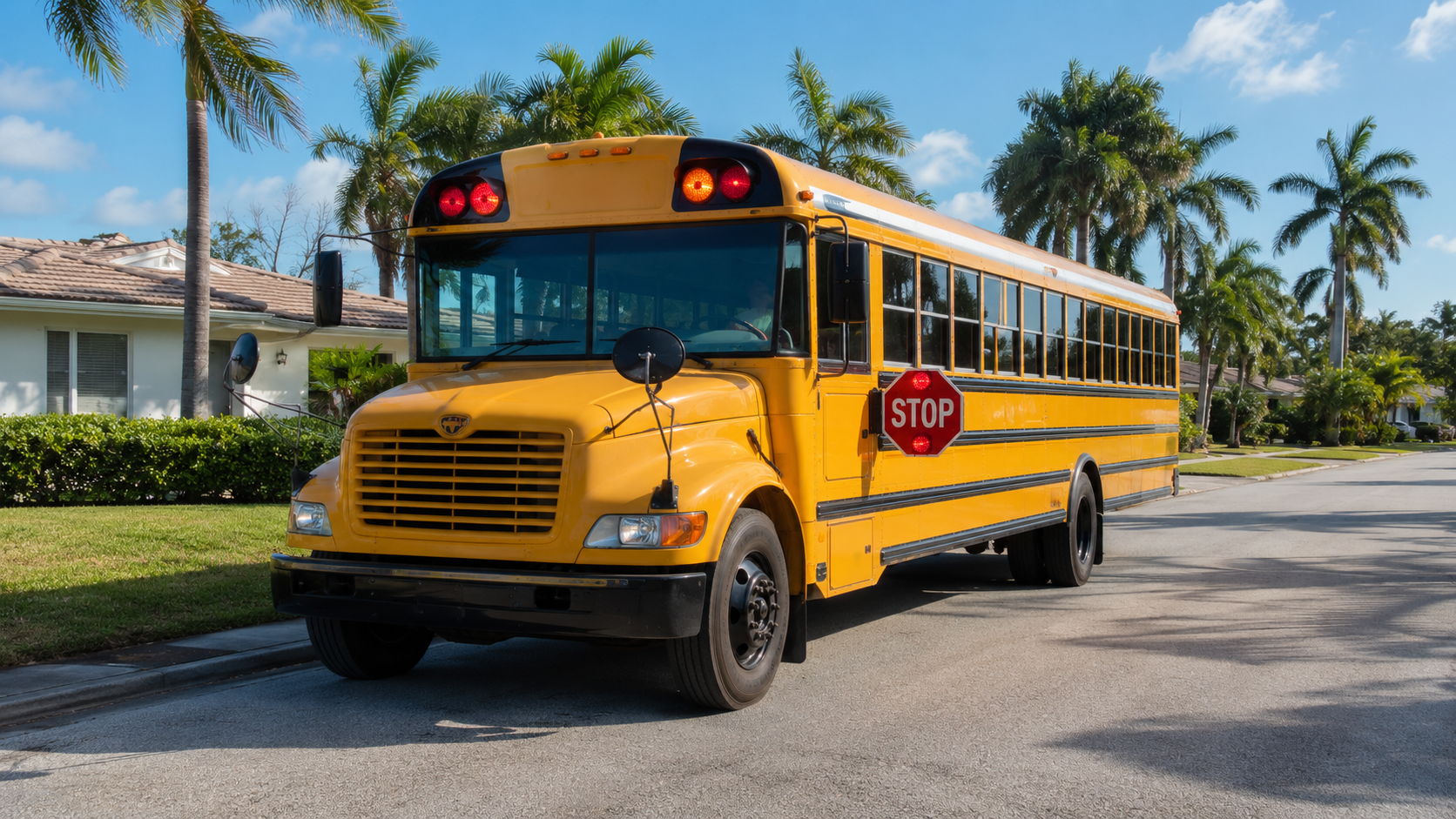
TL;DR: A Florida school bus accident can involve the district, the bus driver, and an outside motorist all at once. Sorting out who pays means untangling comparative fault and the special rules that apply to government defendants.
A school bus accident in Florida often raises a harder question than a routine crash: not just what happened, but which of several parties has to answer for it. A single incident can involve a school district that owns the bus, the employed driver behind the wheel, a private contractor that operates the route, and an outside motorist who ran the stop arm. Each of these carries a different kind of responsibility, and the presence of a government entity changes the timeline and the rules in ways families rarely expect. For a parent whose child was hurt, understanding how liability is divided is the first step toward protecting a claim that may involve serious, lasting injuries.
Why School Bus Cases Are More Complicated Than Ordinary Crashes
Most car accident claims involve two drivers and their insurers. School bus cases add layers. The bus may be owned and operated by a public school district, which is a government body with legal protections that a private company does not have. The driver may be a district employee, a contractor, or an employee of a transportation company hired by the district. Children are frequently the injured parties, and their injuries can be severe because of how buses are built and how students board, ride, and exit.
These cases also turn on facts that take work to reconstruct. Where were the children standing when the bus was struck? Was the stop arm extended and the warning lights active? Did the driver follow the district’s protocol for loading and unloading? Was an outside motorist speeding through a school zone? Each answer points toward a different responsible party, and often more than one shares the blame. Our Boca Raton car accident attorneys approach these cases by mapping every entity that touched the route before deciding where responsibility truly sits.

The Parties Who May Be Responsible
The School District
When a public school district owns the bus and employs the driver, the district can be responsible for the driver’s negligence and for its own failures, such as poor maintenance, inadequate training, or ignoring a known hazard on a route. Because a district is a government entity, though, these claims run through Florida’s sovereign immunity framework, which sets strict rules and dollar limits that private defendants do not face. That does not close the door on a claim; it changes how the claim must be pursued and how damages are ultimately collected.
The Bus Driver
A driver who operates carelessly, misses a child in a mirror, pulls away before a student is clear, or fails to activate warning signals can bear responsibility for the harm that follows. When the driver is a public employee acting within the scope of the job, the claim generally proceeds against the employing agency rather than the individual, again under the government-claim rules. When the driver works for a private contractor, ordinary employer liability principles are more likely to apply.
An Outside Motorist
Many of the most serious school bus injuries do not involve the bus striking anyone at all. They involve a passing car that ignores an extended stop arm and flashing red lights and hits a child crossing to or from the bus. That motorist is an ordinary private driver, fully subject to standard negligence and insurance rules, and often the primary source of recovery for a family. Identifying this driver quickly, along with any dashcam or stop-arm camera footage, is one of the most important early steps in these cases.
A Private Transportation Contractor
Some Florida districts outsource bus operations to private companies. When a contractor employs the driver and manages the buses, that company may be liable for negligent hiring, poor supervision, deferred maintenance, or unsafe scheduling. Contractor cases often avoid the tighter caps that apply to government defendants, which can matter a great deal when a child faces a lifetime of medical needs.
How Sovereign Immunity Shapes Claims Against a District
The single most important rule to understand in a public school bus case is sovereign immunity. Florida has waived its immunity for many injury claims, but only within limits set by statute. Under Florida Statutes section 768.28, recovery against a government entity is generally capped at $200,000 per person and $300,000 per incident, and claimants must give the agency written notice of the claim within a set period before a lawsuit can proceed. Amounts above the cap can only be paid through a separate legislative process known as a claim bill, which is difficult and slow.
These rules have real consequences for injured families. A serious injury to a child can generate medical costs and future needs that far exceed the statutory cap. That is one reason identifying every non-government defendant, such as an at-fault outside motorist or a private contractor, matters so much. Those parties may not be bound by the same limits, and they may carry insurance that can address the full scope of a child’s losses. Missing the strict notice deadline, on the other hand, can bar a claim against the district entirely, which is why acting early is essential.
Comparative Fault When Several Parties Share Blame
Florida divides responsibility using comparative fault, so a school bus accident can result in liability spread across the district, the driver, and an outside motorist in whatever proportions the evidence supports. A jury might find, for example, that a passing driver bears most of the responsibility for ignoring a stop arm while the district bears a smaller share for a driver who stopped in an unsafe spot. Each party then answers for its own percentage, subject to the caps that apply to any government defendant in the mix.
For families, the practical takeaway is that a claim should not stop at the most obvious target. The bus is visible and memorable, but the outside driver who blew past it may hold the larger share of fault and the more accessible insurance. A thorough review of the route, the footage, and the conduct of everyone involved is what turns a partial recovery into a full one.
What Parents Should Do After a School Bus Injury
The first priority is always the child’s medical care, and prompt treatment also creates the record a claim depends on. Beyond that, preserve everything: the names of the district, the driver, and any contractor; photographs of the scene and the bus position; the police report; and the contact information for witnesses, including other parents at the stop. If an outside vehicle was involved, its identity is critical, and stop-arm cameras or nearby traffic cameras may have captured it.
Be cautious about early calls from any insurer or risk manager. Government risk-management offices move quickly to gather statements, and what a shaken parent says in the first days can be used later to reduce a claim. Because the notice deadlines for government defendants are unforgiving, families in Boca Raton, Delray Beach, and across South Florida benefit from getting advice early rather than waiting to see how a child recovers. These are among the most sensitive personal injury cases we handle, both because the injured party is a child and because the deadlines are strict.
Getting Help Early Protects Your Child’s Claim
School bus cases reward early, careful work more than almost any other kind of crash claim. The right defendants have to be identified, the government notice has to be filed correctly and on time, and the evidence that shows who was truly at fault has to be preserved before it disappears. If your child was hurt in or near a school bus, you can request a consultation to understand your options and the deadlines that apply before any of them pass.
Frequently Asked Questions
Who is liable in a Florida school bus accident?
Liability can fall on several parties: the school district that owns the bus, the driver, a private contractor operating the route, or an outside motorist who caused the crash. Often more than one shares fault. Identifying every responsible party early is important, because government defendants carry limits that private ones do not.
Can I sue a Florida school district after a bus accident?
Often yes, but through the sovereign immunity framework. Florida law waives immunity for many injury claims against government entities within limits, and it requires written notice within a set period before suit. Missing that deadline can bar the claim, so families should confirm the requirements early rather than assume the ordinary rules apply.
What is the limit on damages against a Florida school district?
Under Florida Statutes section 768.28, recovery against a government entity is generally capped at $200,000 per person and $300,000 per incident. Amounts above that require a separate legislative claim bill, which is difficult to obtain. This is why identifying non-government defendants, who may not face the same caps, matters in serious cases.
What if another car hit my child near the school bus?
An outside motorist who ignores a stop arm and flashing lights is an ordinary private driver, fully subject to standard negligence and insurance rules. That driver is frequently the primary source of recovery, since they are not shielded by the caps that apply to a government district. Identifying the vehicle quickly is a critical early step.
How long do I have to file a school bus injury claim in Florida?
Claims against government entities require pre-suit written notice within a period set by statute, and the deadline is strict. General injury lawsuits also carry their own statute of limitations. Because a school bus case can involve both government and private defendants with different timelines, confirming every applicable deadline early protects the claim.
Are school bus injuries usually serious?
They can be. Children are often hurt while boarding, exiting, or crossing, and injuries range from fractures to head and spinal trauma, sometimes with lasting effects. The potential severity is one reason these cases warrant a careful review of every responsible party and every source of insurance, so a child’s future needs are fully addressed.