
TL;DR: After a Thanksgiving accident in Florida, what you tell the ER, the paperwork you leave with, and a follow-up visit within 14 days all shape your injury claim.
A Thanksgiving accident in Florida usually happens during one of the heaviest driving weeks of the year, when families are crossing the state on I-95 and the Turnpike and local roads fill up with shoppers and visitors. If you end up in an emergency room after a holiday crash, the records created there become the foundation of any injury claim you bring later.
The good news is that most of what protects your claim is simple, and much of it happens before you ever leave the hospital. Here’s what Boca Raton car accident attorneys recommend doing from the ER bed through the first two weeks, along with a few holiday-specific problems that trip people up.
Why Thanksgiving Week Brings More Crashes
The long weekend puts more drivers on the road than almost any other time of year. Wednesday afternoon and Sunday evening are the worst stretches, as people leave town and then rush back. On I-95 between Boca Raton and Fort Lauderdale, that means stop-and-go traffic where a moment of inattention turns into a rear-end crash.
Many of those drivers are tired, unfamiliar with the area, or heading home after a long dinner. Some have been drinking. Black Friday adds packed parking lots around Town Center at Boca Raton and other shopping centers, where people on foot and cars backing out of spaces share the same narrow lanes.
What to Tell the Emergency Room
The ER visit is often the first medical record of your injuries, and insurance adjusters read it closely. Doctors write down what you report, so give them a full picture even if some symptoms seem minor next to a broken wrist or a cut that needs stitches.
Describe how the crash happened in plain terms, such as “I was stopped at a light and hit from behind” or “the car turned left in front of me.” That short history often appears in the notes and helps connect your injuries to the crash. Mention every area that hurts, including your neck, back, head, and shoulders, along with dizziness, headache, ringing in the ears, or trouble concentrating.
Don’t Downplay Pain to Get Home for Dinner
On a holiday, it’s natural to want to get out quickly and back to family. Telling the staff you’re “fine” when you aren’t can leave gaps in the record. If an insurer later sees that you reported only mild pain and then needed weeks of treatment, they may argue that something else caused the problem.
Concussion symptoms and soft tissue injuries often get worse over the next day or two. If the ER offers imaging or a longer observation period, take the time.
Paperwork to Collect Before You Leave the Hospital
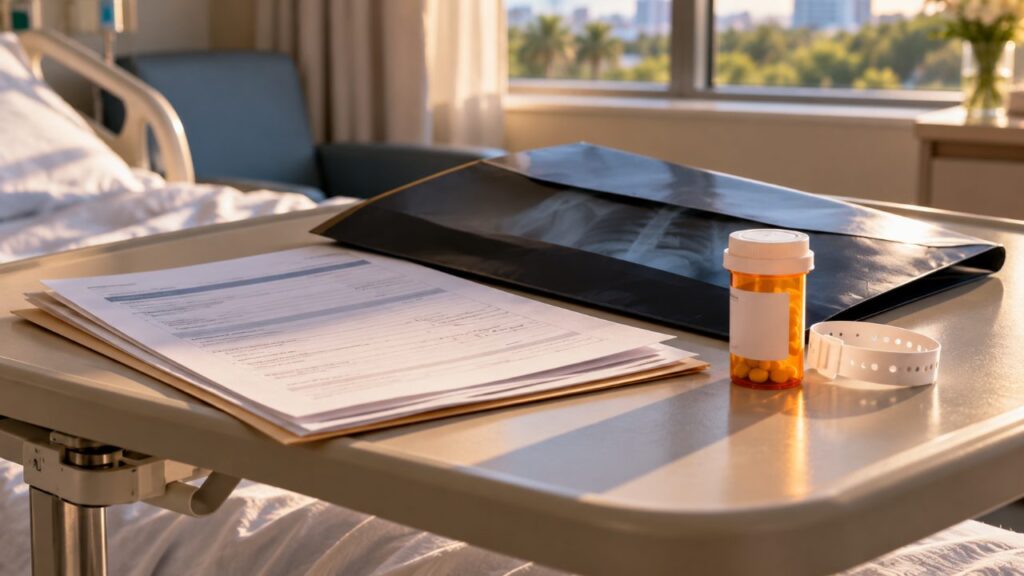
Before you’re discharged, ask for copies of your discharge instructions, any imaging results, and a list of prescriptions. Write down the names of the doctors who treated you and the date and time you arrived. These details are hard to track down months later, and they help anyone reviewing your claim see the timeline clearly.
When the hospital asks for insurance information, give them your auto insurance details. In Florida, personal injury protection, often called PIP, is generally the first coverage that pays medical bills after a car crash, regardless of who caused it. Using it from the start keeps the bills moving to the right place.
Get the Crash Report Information
If police responded to the scene, ask the officer or a family member to get the report number and the agency’s name. Florida requires a crash report when someone is injured, and that report usually lists the drivers, insurance companies, witnesses, and the officer’s notes on what happened.
The Florida Department of Highway Safety and Motor Vehicles explains that crash reports can take up to 10 days to become available and can be purchased through the state’s crash portal. For the first 60 days after a report is filed, the personal information in it is confidential, so only the people involved in the crash, their lawyers and insurers, and a few others named in state law can get a copy.
The 14-Day Rule and the Holiday Weekend
Florida’s no-fault law generally requires you to get initial medical treatment within 14 days of the crash to use your PIP benefits. An ER visit on the day of the accident counts as initial care, but your follow-up still matters. Full PIP medical benefits of up to $10,000 require a physician, dentist, physician assistant, or advanced practice registered nurse to determine that you had an emergency medical condition. Without that finding, medical benefits are capped at $2,500.
Here’s where the holiday causes trouble. A crash on Wednesday night means doctors’ offices are often closed Thursday and Friday, and many people put off the follow-up until “after the holidays.” By the time they call, a week or more has passed and appointments are booked out. Schedule your follow-up as soon as you’re discharged, even if the visit is a week away.
If You Were Visiting From Out of Town
Plenty of Thanksgiving crashes involve people who drove down to see family in Delray Beach or West Palm Beach and plan to head home on Sunday. If that’s you, try to see a doctor before you leave, and keep copies of everything. Once you’re home, tell your regular doctor the injuries came from a car crash so those records connect to the same event.
Recorded Statements and Calls From Insurers
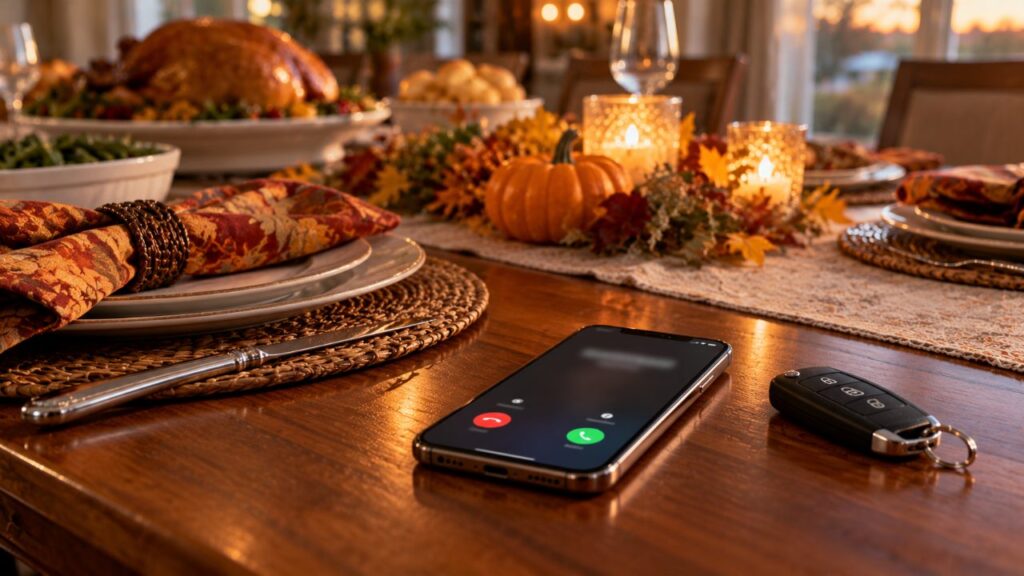
It’s common for the other driver’s insurance company to call within a day or two, sometimes while you’re still in the hospital or recovering at a relative’s house. The adjuster may sound friendly and ask to record a quick statement “to get your side.”
You aren’t required to give a recorded statement to the other driver’s insurer. Answers given while you’re in pain, on medication, or still unsure what happened can be used later to argue that you were partly at fault or not badly hurt. It’s reasonable to say you aren’t ready to talk and to take their contact information. If you’d rather not handle those calls yourself, our auto accident attorneys can speak with the insurer for you.
Your own insurance company is different. Your policy likely requires you to report the crash and cooperate with them, so notify them promptly. If you have questions about what your policy requires, it’s worth asking before you give a detailed statement.
Be Careful With Releases and Medical Authorizations
Don’t sign a release or a broad medical authorization from the other driver’s insurer while you’re still in treatment. A release can end your claim before you know the full extent of your injuries. A broad authorization can give the insurer access to years of unrelated medical history.
Holiday Photos and Social Media
Thanksgiving is a time for family photos, and it’s easy to post a picture of yourself smiling at the table a day after the crash. Insurers do look at social media, and a holiday photo can be used to suggest you weren’t really hurt, even if you spent the rest of the day in pain.
Consider keeping your accounts private and holding off on posting about the crash or your activities until your claim is resolved. Photos of your own injuries are a different matter. Take pictures of bruising, swelling, and cuts over the first several days, since bruises often look worse on day three than on day one.
When to Call a Lawyer Before Discharge
Not every crash requires a lawyer, but some situations make it worth calling early, even from the hospital. These include a serious injury that requires surgery or admission, a crash involving a commercial truck, delivery van, or rideshare vehicle, a driver who left the scene, and any dispute about who caused the crash. Repeated calls from an insurer pressing for a statement are another good reason to get advice.
Early contact also matters because evidence fades quickly. Camera footage from businesses and traffic cameras is often overwritten within days, and witnesses who were traveling for the holiday may be hard to reach once they leave town. A lawyer can request that kind of evidence while it still exists.
Florida generally gives you two years from the date of a crash to file a negligence lawsuit, but waiting rarely helps. Talking with a lawyer can help you understand how Florida’s rules apply to your situation, though every claim depends on its own facts and no outcome is guaranteed.
If you or someone in your family was hurt in a crash over the holiday, you can request a free case review to talk through what happened and what steps make sense next.
Frequently Asked Questions
What should I do at the hospital after a Thanksgiving accident in Florida?
Tell the ER staff how the crash happened and describe every symptom, even ones that seem minor. Ask for copies of your discharge papers, imaging results, and prescriptions, and give the hospital your auto insurance information so your PIP coverage is billed. Then schedule a follow-up visit before you leave.
Do I have to see a doctor within 14 days after a Florida car accident?
Generally, yes. Florida’s no-fault law requires initial medical treatment within 14 days of the crash to use your PIP benefits. An ER visit counts, but a follow-up matters too, because full PIP benefits of up to $10,000 depend on a provider finding that you had an emergency medical condition.
Should I give a recorded statement to the other driver’s insurance company?
You aren’t required to. Statements given while you’re injured, medicated, or unsure of the details can be used to argue you were partly at fault or not seriously hurt. You can politely decline and take the adjuster’s contact information. Your own insurer is different, since your policy likely requires cooperation.
Who pays my hospital bills after a Thanksgiving car accident in Florida?
In most cases, your own personal injury protection coverage pays first, regardless of who caused the crash. PIP generally covers 80 percent of reasonable medical expenses up to your policy limit. Costs beyond PIP may be recoverable from the at-fault driver’s insurer, depending on the facts and the severity of the injuries.
How do I get a copy of my Florida crash report?
Florida crash reports can be purchased through the state’s Florida Crash Portal run by the Department of Highway Safety and Motor Vehicles. Reports can take up to 10 days to become available. For the first 60 days, only the people involved, their lawyers and insurers, and a few others named in state law can get a copy.
Can holiday photos on social media hurt my injury claim?
They can. Insurers review social media, and a smiling photo at Thanksgiving dinner may be used to argue that your injuries weren’t serious. Keeping accounts private and avoiding posts about the crash or your activities until the claim is resolved helps prevent your photos from being taken out of context.