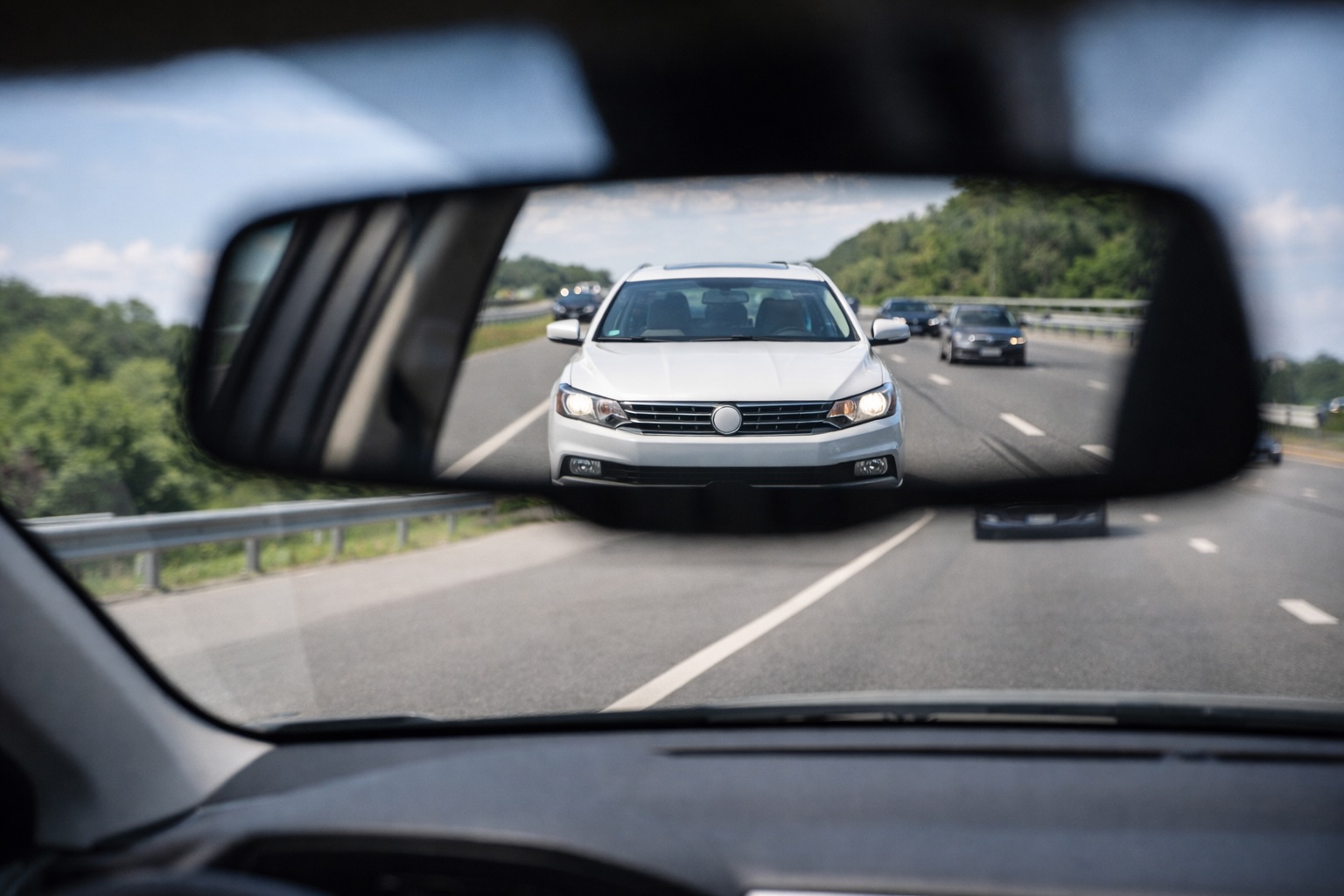
Tailgating remains one of the most dangerous yet preventable driving behaviors on Florida highways, creating rear-end collision risks that escalate dramatically at higher speeds. When drivers follow too closely, they eliminate the reaction time needed to avoid sudden stops, making crashes inevitable when traffic conditions change unexpectedly.
April traffic throughout South Florida remains heavy as late-season tourists and lingering snowbirds share I-95, Florida’s Turnpike, and major routes through Boca Raton, Wellington, Delray Beach, and Palm Beach County with returning local commuters. These congested conditions create situations where tailgating transforms routine slowdowns into multi-vehicle accidents.
At Silver Injury Law, our 30+ years serving South Florida include extensive experience with tailgating accident cases where we help victims prove that negligent following distance caused their injuries.
Florida’s Following Distance Laws
Florida Statute 316.0895 prohibits drivers from following more closely than is reasonable and prudent, considering speed, traffic, and road conditions. This means safe following distance varies based on circumstances rather than following a fixed measurement.
The commonly cited “three-second rule” provides practical guidance. Drivers should maintain enough distance to pass a fixed point at least three seconds after the vehicle ahead passes that same point.
Rain, heavy traffic, or impaired visibility require even greater distances. Drivers who maintain inadequate following distance violate their duty of care and bear liability when rear-end collisions result.
Why Tailgating Causes Accidents
Inadequate Reaction Time:
Human reaction time averages about 1.5 seconds from perceiving danger to beginning a response. When drivers follow too closely, this natural delay eliminates any safety buffer. The vehicle ahead can brake and begin stopping while the following driver hasn’t yet recognized the need to slow.
Compounding Effect at Speed:
A vehicle traveling 60 mph covers 88 feet per second. Even with perfect attention and immediate braking, stopping requires significant distance. Tailgating at highway speeds leaves no margin for the stopping distances physics demands.
Chain Reaction Collisions:
When multiple vehicles follow too closely, one driver’s sudden braking can trigger cascading rear-end collisions. These multi-vehicle accidents complicate liability determination and often result in severe injuries as impact forces accumulate.
Common Tailgating Scenarios
Aggressive Highway Driving:
Some drivers tailgate intentionally to pressure slower vehicles into changing lanes. This aggressive behavior demonstrates reckless disregard for safety and strengthens liability cases. Witnesses who observed aggressive tailgating provide crucial evidence of negligent driving patterns.
Distracted Following:
Drivers texting or adjusting navigation systems often drift closer to vehicles ahead without realizing their following distance has decreased dangerously. When these distracted tailgaters fail to notice brake lights or traffic slowdowns, rear-end collisions result.
Rush Hour Congestion:
Heavy traffic tempts drivers to close gaps in order to prevent others from merging. When sudden slowdowns occur, insufficient spacing means multiple vehicles cannot stop in time.
Proving Tailgating Caused Your Accident
Physical Evidence:
Rear-end damage patterns establish which vehicle struck from behind. Skid marks show whether and when the following driver attempted braking, indicating how much reaction distance existed.
Witness Testimony:
Independent witnesses provide essential evidence about following distances before crashes. Other drivers who noticed aggressive tailgating offer objective accounts that counter claims of sudden, unavoidable stops. Dashboard camera footage increasingly captures tailgating behavior and collision sequences.
Speed Analysis:
Accident reconstruction experts can calculate closing speeds and required stopping distances based on vehicle speeds and road conditions. These calculations demonstrate whether an adequate following distance existed for safe stopping.
Florida’s Rear-End Collision Presumption
Florida law creates a rebuttable presumption that following drivers bear fault in rear-end collisions. This legal principle recognizes that drivers should maintain sufficient following distance to stop safely regardless of what vehicles ahead do.
However, this presumption can be overcome. Following drivers may escape liability by proving the lead vehicle acted negligently, such as stopping suddenly without reason or creating unavoidable hazards. These defenses require compelling evidence.
When Lead Vehicles Share Fault
Brake Light Failures:
Vehicles with broken brake lights prevent following drivers from receiving visual warnings of deceleration. When lead vehicles brake without functioning brake lights, they share some responsibility. However, safe following distance should allow stopping even without brake light warnings.
Sudden Stops Without Cause:
Vehicles that brake hard without legitimate reason may share fault for resulting collisions. Following drivers bear a substantial burden of proving stops were truly unnecessary rather than simply unexpected.
Tailgating Accident Injuries
Whiplash and Neck Injuries:
Rear-end impacts snap heads backward then forward, straining neck muscles and ligaments. Whiplash injuries range from minor strains to severe soft tissue damage causing chronic pain. The severity often correlates with impact speed and whether victims braced for collision.
Back and Spinal Trauma:
Compression forces from rear impacts stress spinal structures, causing disc herniations, vertebrae fractures, and nerve damage. These injuries may not manifest obvious symptoms immediately, but could develop into serious chronic conditions.
What to Do After Tailgating Accidents
Call police to document the accident officially. Officer observations about final vehicle positions, skid marks, and traffic conditions provide important evidence. Police reports noting following-too-closely violations create strong liability presumptions.
Take photographs showing final positions, vehicle damage, road conditions, and any visible skid marks. Collect witness contact information from drivers who observed tailgating before the crash.
Seek immediate medical evaluation even for seemingly minor impacts. Whiplash and soft tissue injuries often worsen over hours or days. Prompt medical documentation establishes injury causation and prevents insurance companies from arguing injuries resulted from other causes.
Frequently Asked Questions
Am I always at fault if I rear-ended someone? Typically yes, though extraordinary circumstances like brake light failures may reduce your liability percentage.
What if multiple vehicles hit me from behind? Each following driver bears responsibility for maintaining safe following distance, creating multiple liable parties.
Can I recover if I was partially at fault? Yes, Florida’s comparative negligence allows recovery if you were 50% or less responsible, though compensation is reduced by your fault percentage.
How do I prove the other driver was tailgating? Witness statements, photographs, and expert analysis of stopping distances establish insufficient following distance.
Protecting Your Rights After Tailgating Accidents
Tailgating accidents often appear straightforward, yet insurance companies deploy sophisticated strategies to minimize payouts. They may argue sudden stops, mechanical failures, or shared negligence to reduce their financial responsibility.
As April brings heavier highway traffic to South Florida’s major routes, tailgating risks increase substantially. Understanding your rights after rear-end collisions caused by negligent following distance ensures you receive fair compensation.
If you’ve been injured in a tailgating accident in Boca Raton, Wellington, Delray Beach, or anywhere in Palm Beach or Broward Counties, contact Silver Injury Law for a free consultation. Our experienced car accident attorneys understand tailgating liability and fight for maximum compensation.
Remember: there’s no obligation for our consultation, and we only get paid when we successfully recover compensation.