

TL;DR: An I-95 truck accident in Florida is governed by federal safety rules, not just state traffic law. Hours-of-service limits, ELD logs, and drug testing records often decide who is liable and how much your claim is worth.
An I-95 truck accident in Florida is rarely a simple two-car crash scaled up. When an 80,000-pound tractor-trailer collides with a passenger vehicle on the corridor between Boca Raton and Miami, the case pulls in a web of federal regulations that most drivers never think about. Those rules, written by the Federal Motor Carrier Safety Administration, govern how long a trucker can drive, how their hours are logged, and how carriers screen for drugs and alcohol. Understanding them is often the difference between a claim that settles fairly and one that stalls.
Why I-95 Is So Dangerous for Trucks
The stretch of Interstate 95 running through Palm Beach and Broward counties is one of the busiest and most congested freight routes in the country. Commercial trucks moving goods from the Port of Miami and the Port of Palm Beach share crowded lanes with commuters, tourists, and construction zones. Speeds shift suddenly, exits come fast, and the volume of heavy vehicles gives little margin for error.
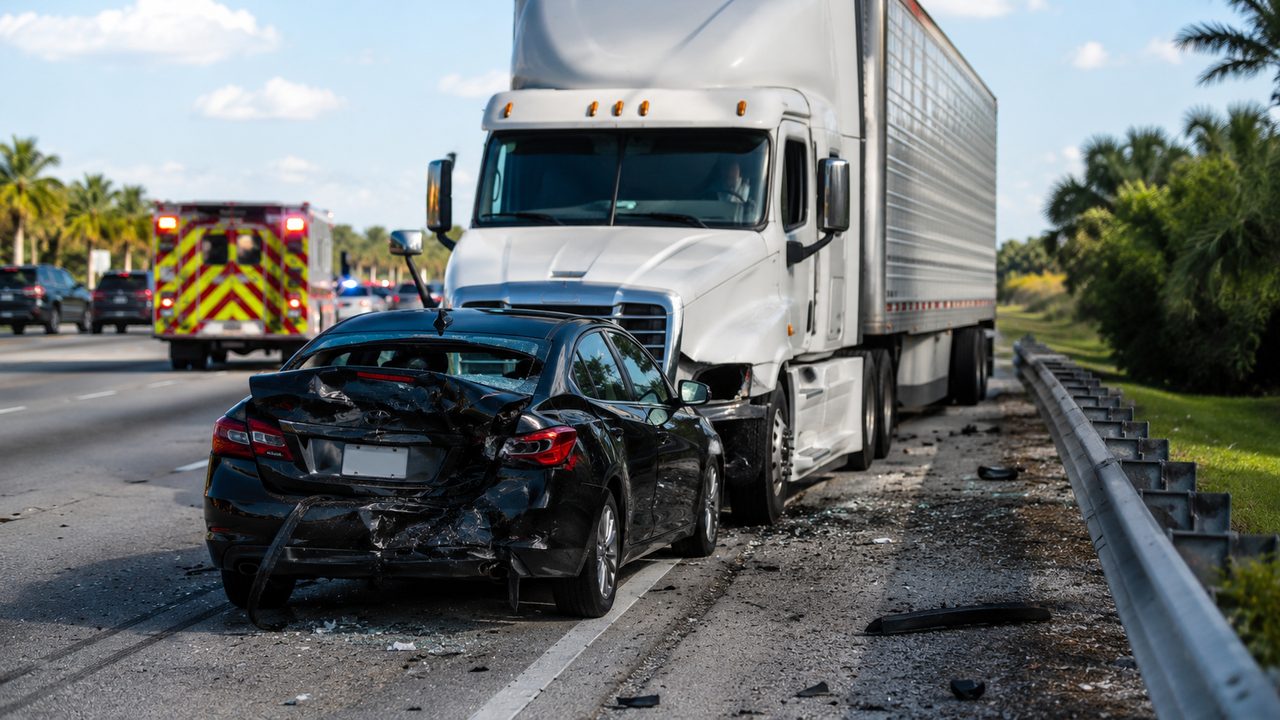
The physics alone explain the severity. A fully loaded semi can weigh twenty to thirty times more than a family sedan and needs far more distance to stop. When a truck rear-ends a smaller vehicle at highway speed, or when a trailer jackknifes across lanes, the people in the passenger car absorb catastrophic force. Injuries in these crashes tend toward the serious end: spinal damage, traumatic brain injury, and multiple fractures are common.
The Boca-to-Miami Freight Squeeze
Local geography makes matters worse. The corridor funnels regional and interstate freight into a narrow band hemmed in by the coast to the east and the Everglades to the west. Trucks bound for Fort Lauderdale distribution centers and South Florida retailers pile onto the same lanes as beachgoers and daily commuters. Rush hour never fully clears, and a single truck crash can shut down miles of highway for hours.
Federal Rules Are the Backbone of a Truck Claim
Ordinary car accident cases run on state traffic law and Florida’s no-fault insurance system. Truck cases add an entire federal layer. Interstate carriers and their drivers must follow the Federal Motor Carrier Safety Regulations, and violations of those rules can establish negligence in a civil claim. This is what separates truck accident representation from a standard auto case, and it is why the investigation looks so different.
Hours of Service: Fighting Driver Fatigue
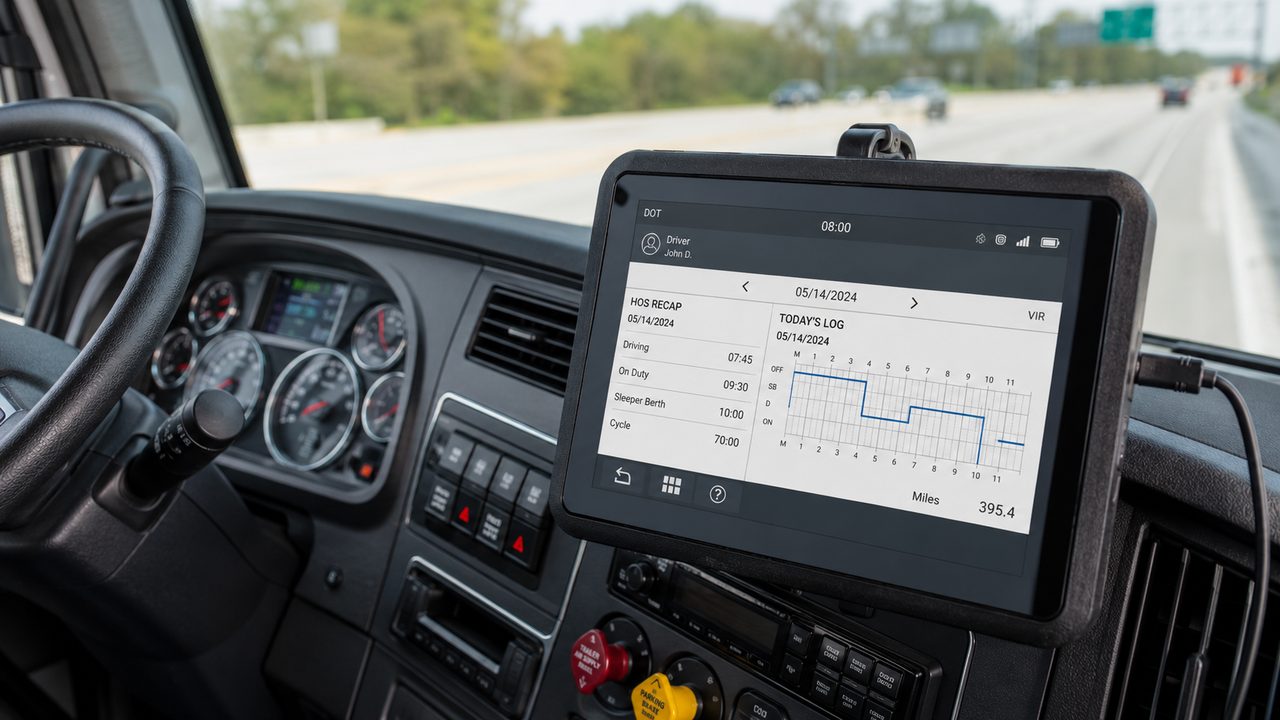
The most important of these rules govern hours of service, the limits on how long a driver can operate before resting. According to the Federal Motor Carrier Safety Administration, a property-carrying driver may drive a maximum of 11 hours after 10 consecutive hours off duty, and may not drive beyond the 14th consecutive hour after coming on duty. Drivers must also take a 30-minute break after 8 cumulative hours of driving time.
These limits exist because fatigue impairs a driver much like alcohol does. When a trucker pushes past the legal window to make a delivery deadline, or when a carrier pressures drivers to skip breaks, the resulting crash is not just an accident. It is a preventable violation, and proving it can strengthen an injured person’s case significantly.
Electronic Logging Devices: The Digital Paper Trail
For years, drivers tracked their hours on paper logs that were easy to falsify. Federal rules now require most commercial trucks to use electronic logging devices, or ELDs, which automatically record driving time by connecting to the engine. These devices create a digital record that is far harder to fake, and that record becomes central evidence after a crash.
The catch is that carriers are only required to keep ELD data for a limited time. Once litigation looks likely, an attorney can send a legal preservation letter, sometimes called a spoliation letter, demanding that the company retain the logs, maintenance records, and dispatch communications. Move too slowly and that evidence can disappear, which is one more reason prompt action matters in these cases.
Drug and Alcohol Testing Records
Federal regulations require carriers to test drivers for drugs and alcohol before hiring, at random intervals, and after serious crashes. Post-accident testing is mandatory when a truck is involved in a collision that causes a fatality, or in certain injury and towing situations. Those results, along with the driver’s testing history, can reveal whether impairment played a role and whether the carrier ignored warning signs when it put that driver on the road.
Who Can Be Held Responsible
One of the biggest differences in truck cases is the number of parties potentially at fault. A car crash usually involves one other driver. A truck crash can implicate several businesses at once, and identifying every responsible party often expands the available insurance coverage.
The truck driver may be liable for negligent driving or for violating federal rules. The motor carrier that employs the driver may share responsibility for pushing unrealistic schedules, skipping maintenance, or hiring a driver with a poor record. A separate company may own the trailer or the cargo, and improper loading that shifts weight or causes a rollover can point toward whoever packed it. In some cases, a maintenance contractor or a parts manufacturer enters the picture when brake or tire failure contributed to the crash.
Why More Defendants Can Help Your Case
Sorting out this many parties sounds daunting, and it is one reason people injured on I-95 near West Palm Beach or Delray Beach benefit from experienced counsel. Each additional at-fault party may carry its own liability policy, and commercial trucking policies are typically far larger than personal auto coverage. Building the full picture of fault is not about spreading blame for its own sake. It is about making sure the compensation available actually matches the harm done.
What to Do After an I-95 Truck Crash
The steps after a truck crash mirror those after any serious collision, with a few additions that reflect the higher stakes. Prioritize medical care, because injuries from these wrecks are often severe and some, like internal bleeding or brain trauma, are not obvious at the scene. Florida also requires initial treatment within 14 days to preserve your no-fault benefits.
At the scene, if you are able, document everything: the truck’s company name and DOT number, the trailer markings, the position of the vehicles, and the contact information of any witnesses. Police reports carry extra weight in truck cases because responding officers frequently note federal violations. Avoid giving a recorded statement to the carrier’s insurer, which will often dispatch investigators to the scene within hours to protect the company’s interests. When a corporate team is already building its defense, having your own advocate levels the field. Our experienced Boca Raton car accident attorneys can move quickly to preserve the electronic records that matter most, and you can request a free case review to understand your options.
Frequently Asked Questions
What makes I-95 truck accidents different from car accidents?
Truck crashes involve federal safety regulations that ordinary car cases do not. Rules on driving hours, electronic logs, and drug testing can establish negligence. Trucks also cause more severe injuries and involve more potential defendants, including carriers and cargo companies, which changes how the claim is investigated and valued.
What are hours-of-service rules and why do they matter?
Hours-of-service rules limit how long a commercial driver can operate before resting. A property-carrying driver may drive up to 11 hours after 10 hours off duty and cannot drive past the 14th hour on duty. Violations show fatigue and can strengthen an injured person’s claim against the driver and carrier.
What is an electronic logging device?
An electronic logging device, or ELD, connects to a truck’s engine and automatically records driving time. It replaced paper logs that were easy to falsify. After a crash, ELD data becomes key evidence of whether the driver exceeded legal hours, so preserving it quickly through a legal notice is important.
Who can be sued after a Florida truck accident?
Multiple parties may share liability. The driver, the motor carrier that employed them, a separate trailer or cargo owner, a maintenance contractor, or a parts manufacturer can all be responsible depending on the cause. Identifying every at-fault party often expands the insurance coverage available to an injured person.
How long do I have to file a truck accident claim in Florida?
Florida generally allows two years from the date of a negligence-based injury to file a lawsuit, following a 2023 change to the statute of limitations. Deadlines can vary with the facts, and evidence like ELD logs disappears fast, so acting well before the deadline protects your claim.
Should I talk to the trucking company’s insurance adjuster?
It is wise to be cautious. Trucking insurers often send investigators to the scene within hours and may call you quickly seeking a recorded statement. You are not required to provide one, and early statements can be used to reduce your claim. Speaking with an attorney first helps protect your interests.