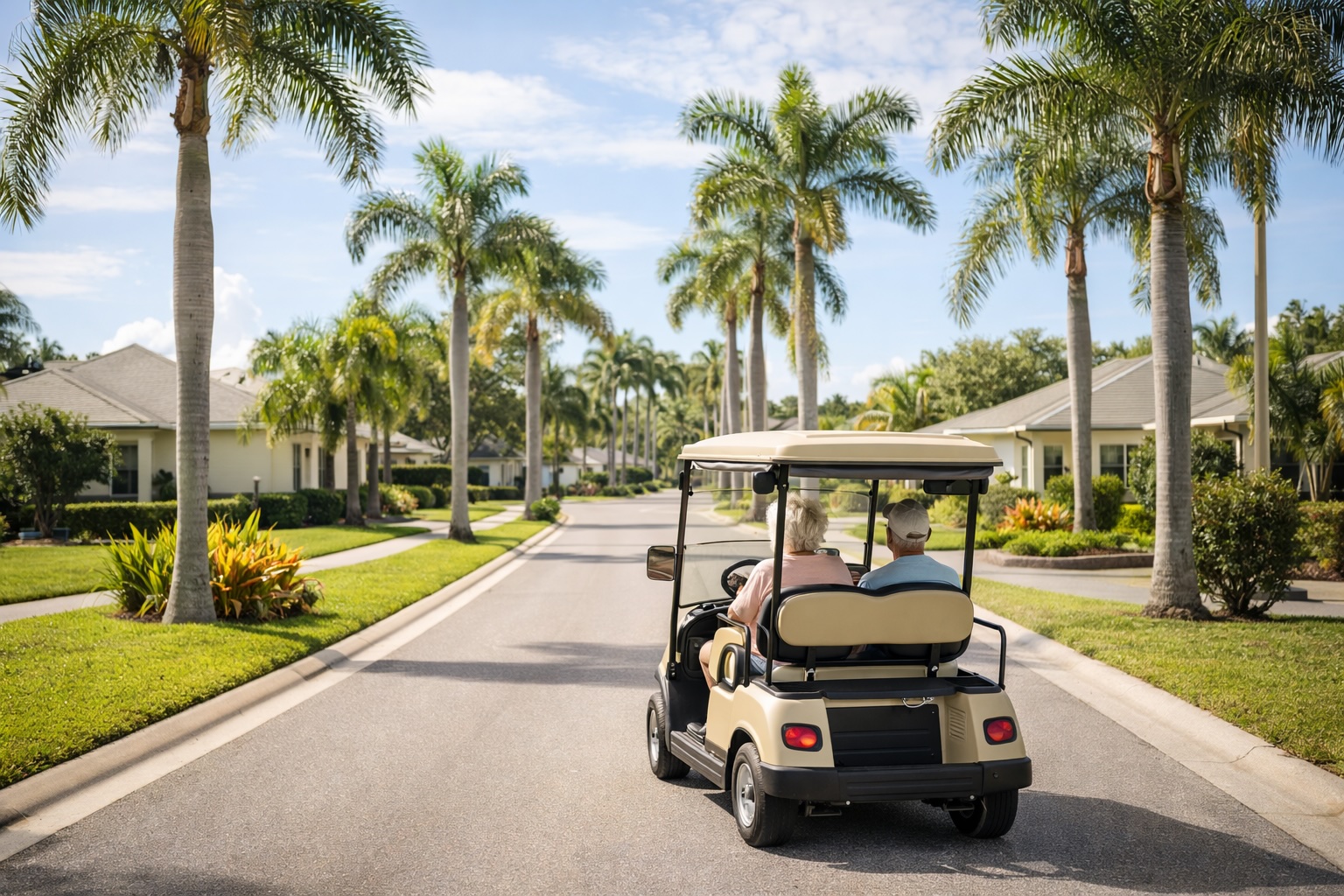
Golf carts have evolved from strictly recreational vehicles confined to golf courses into common transportation throughout South Florida’s retirement communities, resorts, and residential neighborhoods. This expanded use creates serious accident risks as these low-speed vehicles share roads with traditional automobiles, often resulting in catastrophic injuries when collisions occur.
March brings peak golf cart activity throughout Palm Beach and Broward Counties as pleasant weather draws snowbirds and residents to outdoor activities. Communities like Kings Point, Century Village, and numerous gated developments throughout Boca Raton, Wellington, and Delray Beach see heavy golf cart traffic that increases collision risks with pedestrians, cyclists, and motor vehicles.
At our car accident law firm, our 30+ years serving South Florida includes extensive experience with golf cart accident cases where we help victims navigate unique liability questions and recover compensation for serious injuries these seemingly harmless vehicles can cause.
Florida’s Golf Cart Laws
Florida law establishes specific requirements for golf cart operation that differ significantly from standard vehicle regulations.
Where Golf Carts Can Operate:
Florida Statute 316.212 allows golf carts on roads with posted speed limits of 30 mph or less in certain circumstances. However, golf carts cannot cross roads with speed limits exceeding 35 mph except at designated crossings. According to the Florida Department of Highway Safety and Motor Vehicles, many communities establish additional restrictions through local ordinances that further limit where golf carts may travel.
Many retirement communities and planned developments create designated golf cart paths and permit cart operation on internal roads. However, these private road rules don’t necessarily apply when golf carts venture onto public roadways, creating confusion about legal operation parameters.
Equipment Requirements:
Golf carts operating on public roads must be equipped with functional brakes, reliable steering, safe tires, rearview mirrors, red reflectors on front and rear, and parking brakes. While headlights, tail lights, turn signals, and windshields are not required for golf carts, low-speed vehicles (LSVs) that can reach higher speeds face more stringent equipment mandates.
Many golf cart operators neglect proper maintenance, operating vehicles with worn brakes, bald tires, or broken steering components. These mechanical failures contribute to accidents that create liability for negligent owners and operators.
Operator Requirements:
Florida requires golf cart operators to possess valid driver’s licenses when operating on public roads. This requirement exists because golf carts, despite their low speeds, present genuine traffic hazards requiring responsible operation. Unlicensed operators, including teenagers and elderly individuals with suspended licenses, create liability concerns when accidents occur.
Common Golf Cart Accident Scenarios
Several typical situations create golf cart collision liability questions requiring legal analysis.
Collisions with Motor Vehicles:
When automobiles strike golf carts, the results often prove devastating. Golf carts lack the safety features, structural integrity, and protective barriers that passenger vehicles provide. Occupants suffer ejection risks, direct impact injuries, and crushing forces that cause traumatic brain injuries, spinal cord damage, and fatal trauma.
Determining fault in these accidents requires analyzing whether the golf cart was operating legally on the roadway, whether the motor vehicle driver exercised proper care around the slower-moving cart, and which party violated traffic laws. Automobile drivers who speed through residential areas where golf carts commonly operate may bear liability even when golf carts made unexpected movements.
Golf Cart Rollovers:
Golf carts tip easily due to their high center of gravity, narrow wheelbase, and lack of stability control systems. Sharp turns, uneven terrain, excessive speeds, and overcrowding all contribute to rollover accidents. Passengers lacking seatbelts (which most golf carts don’t provide) suffer ejection and crushing injuries when carts overturn.
Operators who drive recklessly, allow excessive passenger loads, or operate carts on terrain unsuitable for their design bear liability for resulting injuries. Golf cart owners who fail to maintain steering and brake systems that would prevent rollovers may also face negligence claims.
Pedestrian and Cyclist Collisions:
Golf cart operators must watch for pedestrians and cyclists just as automobile drivers do. Quiet electric golf carts pose particular hazards as pedestrians may not hear approaching vehicles. When golf cart operators fail to yield at crossings, drive distractedly, or operate vehicles on sidewalks or pathways, they create liability for striking pedestrians.
Passenger Injuries:
Golf cart passengers often suffer injuries when operators brake suddenly, turn sharply, or accelerate abruptly. Without seatbelts or secure seating, passengers slide off seats or fall from moving carts. Operators owe duties to transport passengers safely, meaning they bear liability when negligent operation causes passenger injuries.
Who Can Be Liable in Golf Cart Accidents?
Multiple parties may share responsibility for golf cart accidents depending on specific circumstances.
Golf Cart Operators:
Drivers who operate golf carts negligently bear primary liability for resulting accidents. This includes speeding, failing to yield, driving while impaired, operating mechanically defective carts, or violating traffic laws. The same negligence standards that apply to automobile drivers generally apply to golf cart operators.
Golf Cart Owners:
Owners who allow others to operate poorly maintained carts may face liability under negligent entrustment theories. If owners know brakes are failing, steering is loose, or tires are bald but still permit operation, they share responsibility for foreseeable accidents.
Rental companies and resorts that provide golf carts to guests must maintain vehicles in a safe condition. Failure to inspect, service, and repair carts creates liability when mechanical failures cause accidents.
Property Owners and Communities:
Retirement communities and residential developments that permit or encourage golf cart use owe duties to maintain safe conditions. Poorly designed cart paths, inadequate lighting, or failure to warn of hazards may establish premises liability when accidents occur on community property.
Manufacturers:
Defective golf cart design or manufacturing may contribute to accidents. Steering failures, brake defects, or unstable designs that cause rollovers can establish product liability claims against manufacturers. These cases require expert analysis to prove defects caused accidents.
Proving Negligence in Golf Cart Accidents
Establishing liability in golf cart crashes demands thorough investigation and comprehensive evidence.
Critical Evidence:
Photographs documenting the accident scene, vehicle damage, road conditions, and any visible injuries prove essential. For rollover accidents, images showing terrain, cart position, and environmental factors help reconstruct how accidents occurred.
Witness statements from other community residents, pedestrians, or passengers provide crucial perspectives. Many golf cart accidents occur in residential areas where multiple witnesses observe negligent operation patterns.
Maintenance records reveal whether carts received proper service and whether known defects existed before accidents. Rental companies and community associations typically maintain service logs that document mechanical conditions.
Golf Cart Accident Injuries
The lack of protective features makes golf cart accidents particularly dangerous despite low operating speeds.
Ejection Injuries:
Passengers thrown from golf carts during rollovers or sudden stops suffer severe head trauma, spinal injuries, broken bones, and road rash. The absence of seatbelts and doors means occupants easily separate from vehicles during accidents.
Crushing Injuries:
When golf carts roll over, their weight crushes occupants underneath. These accidents cause catastrophic spinal cord injuries, traumatic brain injuries, internal organ damage, and fatalities. The open design provides no protective cage or crumple zones that modern automobiles offer.
What to Do After a Golf Cart Accident
Taking proper steps after golf cart accidents protects legal rights and strengthens compensation claims.
Call police to document accidents, even those occurring on private property. Law enforcement reports establish official records of what occurred and may note traffic violations or equipment defects. Officers should document where the accident happened, whether the golf cart was operating legally, and any apparent negligence.
Seek immediate medical attention regardless of apparent injury severity. The impact forces in golf cart accidents can cause serious internal injuries that don’t manifest obvious symptoms initially. Prompt medical evaluation documents injuries and establishes causation.
Photograph everything including the golf cart’s condition, surrounding area, any defects or damage, and visible injuries. Collect contact information from witnesses and other parties involved.
How Silver Injury Law Handles Golf Cart Cases
Golf cart accidents involve unique legal questions about vehicle operation laws, community regulations, and specialized liability theories. We investigate thoroughly to determine all responsible parties, from negligent operators to communities that failed to maintain safe conditions.
Our experience includes working with accident reconstruction experts who analyze rollover dynamics, mechanical failures, and operator error patterns. We understand the specific Florida statutes governing golf cart operation and know how to prove violations contributed to accidents.
We handle all golf cart accident cases on a contingency fee basis, meaning you pay no attorney fees unless we successfully recover compensation for your injuries.
Frequently Asked Questions
Do I need insurance to operate a golf cart? Florida doesn’t require golf cart insurance, but liability coverage is strongly recommended given serious injury risks.
Can children drive golf carts? No, valid driver’s licenses are required for golf cart operation on public roads in Florida.
What if the accident happened on private community property? Liability laws still apply on private property, though community rules may affect negligence analysis.
Are golf cart accidents covered by auto insurance? Coverage depends on specific policy language; some homeowners policies cover golf carts while others exclude them.
Protecting Your Rights After Golf Cart Accidents
Golf cart accidents cause serious injuries that deserve full compensation despite the vehicles’ seemingly harmless nature. The unique legal framework governing these vehicles requires experienced representation to navigate successfully.
As March brings peak outdoor activity and golf cart use throughout South Florida’s retirement communities, understanding your rights after these accidents becomes crucial. Don’t let insurance companies minimize your injuries or argue that golf cart accidents shouldn’t generate substantial claims.
If you’ve been injured in a golf cart accident in Boca Raton, Wellington, Delray Beach, or anywhere in Palm Beach or Broward Counties, contact Silver Injury Law for a free consultation. Our experienced personal injury attorneys understand golf cart liability and fight for maximum compensation.