
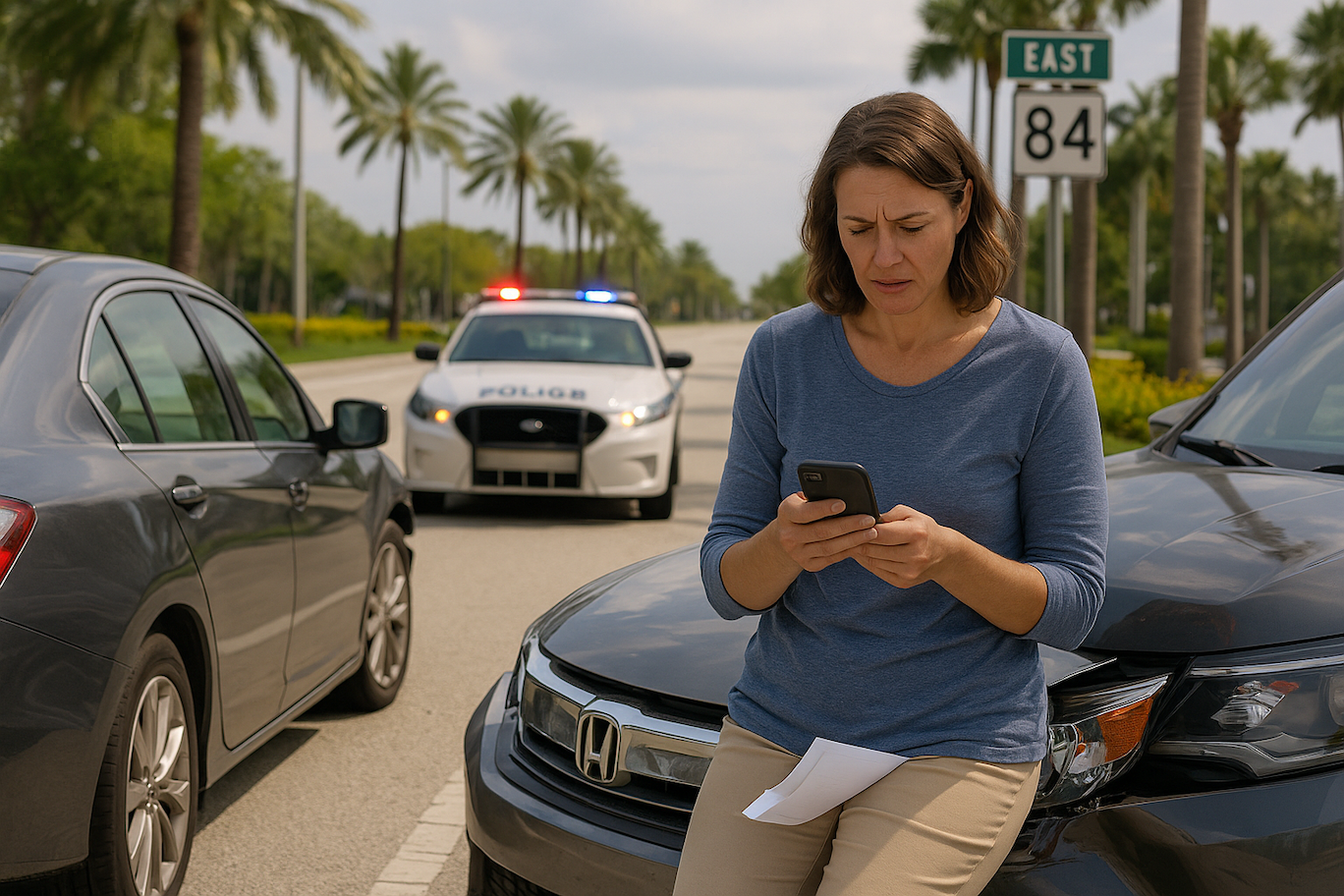
Getting hit by a driver who lacks insurance creates immediate financial anxiety on top of physical injuries and vehicle damage. While you focus on recovering from your injuries, questions arise about who will pay your medical bills, repair your car, and compensate you for lost wages. Understanding your options after an uninsured motorist accident in Florida protects your financial recovery and helps you navigate the complex claims process ahead.
December brings particular challenges as financial stress during the holiday season means more drivers allow their insurance to lapse. At Silver Injury Law, our 30+ years of experience handling uninsured motorist claims throughout Boca Raton, Wellington, Delray Beach, and Palm Beach County means we understand how to maximize recovery even when the at-fault driver has no insurance.
Florida’s Uninsured Driver Problem
Florida faces a significant uninsured driver challenge despite state laws requiring minimum insurance coverage. According to the Florida Department of Highway Safety and Motor Vehicles, approximately 5.37% of registered vehicles in Florida operate without the required insurance, representing over 900,000 uninsured vehicles on our roads. This official figure likely underestimates the true scope since it only counts registered vehicles, not unlicensed drivers or vehicles with expired registrations.
Why Drivers Go Uninsured:
Several factors contribute to Florida’s uninsured driver population. Rising insurance premiums strain household budgets, particularly during expensive holiday seasons when other financial priorities compete for limited resources. Some drivers allow policies to lapse after missing premium payments and continue driving despite losing coverage. Others never purchase insurance at all, either due to cost concerns or deliberate disregard for legal requirements.
South Florida’s Unique Challenges:
Palm Beach and Broward Counties see substantial traffic from both residents and visitors, increasing the likelihood of encountering uninsured drivers. Popular destinations in Boca Raton, Delray Beach, and Wellington attract drivers from across Florida and beyond, not all of whom maintain proper insurance coverage. Tourist areas and shopping districts experience particularly high traffic volumes during December, multiplying your exposure to potential uninsured motorist accidents.
Florida Insurance Requirements and Critical Coverage Gaps
Understanding Florida’s unusual insurance system helps explain why uninsured motorist coverage becomes so critical for protecting your financial interests.
Florida’s Minimum Coverage Requirements:
Florida requires all registered vehicles to carry $10,000 in Personal Injury Protection (PIP) coverage and $10,000 in Property Damage Liability (PDL). Notably, Florida does not require drivers to carry bodily injury liability insurance, making it one of only two states without this requirement. This creates a dangerous situation where at-fault drivers bear no legal obligation to carry insurance that compensates injury victims.
The Coverage Gap Problem:
Florida’s no-fault system requires your own PIP coverage to pay initial medical expenses regardless of who caused the accident. However, PIP provides only $10,000 in coverage and pays just 80% of medical expenses and 60% of lost wages. For any serious car accident injury, these limits prove woefully inadequate.
When the at-fault driver lacks insurance, victims face the harsh reality of catastrophic injuries with no compensation source beyond their own limited PIP benefits. This gap makes uninsured motorist coverage essential protection that most Florida drivers should carry.
What Is Uninsured Motorist Coverage?
Is uninsured motorist coverage required in Florida?
Uninsured Motorist (UM) coverage is not mandatory in Florida, though insurance companies must offer it and you can only reject it by signing a written waiver. This optional coverage becomes your financial lifeline when an uninsured driver causes your injuries.
How UM Coverage Works:
UM coverage essentially steps into the shoes of the absent insurance company, paying compensation that the at-fault driver’s liability insurance would have paid if it existed. Your own insurance company becomes responsible for compensating your injuries, lost wages, pain and suffering, and other damages according to your policy limits.
Underinsured Motorist (UIM) Coverage:
Closely related to UM coverage, UIM protection applies when the at-fault driver carries insurance but their policy limits fall short of your total damages. If a driver with only $25,000 in coverage causes $100,000 in injuries, your UIM coverage bridges that gap up to your policy limits.
Stacked vs. Non-Stacked Coverage:
Florida allows you to purchase stacked or non-stacked UM/UIM coverage. Stacked coverage multiplies your per-vehicle limits by the number of vehicles on your policy, providing substantially higher total coverage. Non-stacked coverage applies the same limits regardless of how many vehicles you insure. Stacked coverage costs more but provides significantly better protection.
Immediate Steps After Being Hit by an Uninsured Driver
What should I do if hit by an uninsured driver in Florida?
Taking proper action immediately after discovering the other driver lacks insurance protects both your physical recovery and your financial claim.
At the Accident Scene:
Call police immediately and insist on a complete accident report. Police documentation becomes crucial evidence in UM claims where your own insurance company investigates the accident and may dispute liability or damages. Never leave the scene without official police documentation, even for seemingly minor collisions.
Document everything thoroughly with photographs and video. Capture all vehicle damage, the accident scene including road conditions and traffic controls, visible injuries, and the other driver’s license and vehicle information. Even though they lack insurance, collecting their driver’s license number and vehicle registration helps establish their identity for your UM claim.
Get contact information from all witnesses. Their independent observations strengthen your claim when your insurance company questions what happened or how the accident occurred.
Verify Insurance Status:
Request the other driver’s insurance information even if they claim to have none. Some drivers mistakenly believe their coverage has lapsed when it remains active, while others lie about insurance status. Your attorney can verify actual insurance status through official channels.
Seek Immediate Medical Attention:
Visit a doctor or emergency room promptly even for apparently minor injuries. Delaying medical treatment gives insurance companies ammunition to argue your injuries weren’t serious or weren’t caused by the accident. Comprehensive medical documentation from the outset establishes the full extent of your injuries and creates important evidence for your UM claim.
Filing an Uninsured Motorist Claim
Pursuing compensation through your own UM coverage involves a fundamentally different process than typical third-party liability claims.
Notify Your Insurance Company Promptly:
Contact your insurance company immediately to report the accident and potential UM claim. Your policy likely includes specific time limits for reporting accidents, and failing to provide timely notice could jeopardize your coverage. Provide basic facts about the accident but avoid detailed recorded statements until consulting with an attorney.
The UM Claims Investigation:
Your insurance company will investigate the accident just as they would if you were making a claim against someone else’s insurance. They examine police reports, interview witnesses, review medical records, and assess property damage. Remember that your own insurer now stands in an adversarial position since they must pay your claim from their own funds rather than recovering from another insurance company.
Common UM Claim Challenges:
Insurance companies frequently dispute UM claims by questioning liability, arguing you were partially at fault, minimizing injury severity, or offering inadequate settlement amounts. Your insurer may conduct surveillance, hire investigators, or deploy other tactics to reduce claim value. Having experienced legal representation levels this uneven playing field and protects you from insurance company overreach.
What If You Don’t Have UM Coverage?
Can I recover compensation without uninsured motorist coverage?
Victims without UM coverage face severely limited options for recovering compensation from uninsured drivers.
Suing the Uninsured Driver Directly:
You can file a lawsuit against the uninsured driver personally and obtain a judgment for your damages. However, winning a judgment and actually collecting money represent two entirely different challenges. Most uninsured drivers lack insurance precisely because they lack financial resources, making them effectively judgment-proof.
Even substantial court judgments often prove uncollectible when defendants have no significant assets, income, or property to seize. Bankruptcy filings can eliminate personal injury judgments, leaving you with nothing despite winning your case.
Limited Alternative Recovery Sources:
Your own medical insurance, Medicare, or Medicaid may cover some medical expenses, though you remain responsible for deductibles, copays, and any amounts exceeding coverage limits. These programs typically assert liens against any future recovery, further reducing your net compensation.
Your PIP coverage provides up to $10,000 in immediate benefits but falls far short of covering serious injury costs. Property damage to your vehicle may be covered by your collision insurance if you carry that optional coverage.
The Hard Reality:
Without UM coverage, many uninsured motorist accident victims cannot recover fair compensation for their injuries. Medical bills pile up, lost wages create financial strain, and pain and suffering go uncompensated. This harsh outcome demonstrates why purchasing adequate UM/UIM coverage should be a priority for every Florida driver.
How Silver Injury Law Maximizes UM Claim Recovery
Silver Injury Law brings decades of experience fighting insurance companies on behalf of uninsured motorist accident victims throughout South Florida.
Aggressive UM Claim Advocacy:
We thoroughly document all damages including medical expenses, future treatment needs, lost income, diminished earning capacity, and pain and suffering. Our relationships with medical experts, economists, and vocational specialists help prove the full value of your claim when insurance companies attempt to minimize damages.
We know the tactics insurance companies use to reduce UM claim payments and counter them effectively. Our trial-ready approach motivates insurers to offer fair settlements rather than risk substantial jury verdicts in UM arbitration or litigation.
Understanding Complex UM Policy Provisions:
UM insurance policies contain technical provisions regarding stacking, coverage limits, offsets for other payments, and arbitration procedures. We analyze your specific policy language to maximize available benefits and ensure your insurance company honors all contractual obligations.
No Upfront Costs:
We handle all uninsured motorist claims on a contingency fee basis. You pay no attorney fees unless we successfully recover compensation, allowing you to access experienced legal representation regardless of your financial situation after an accident.
Frequently Asked Questions
How much uninsured motorist coverage should I carry? Most experts recommend matching your UM/UIM limits to your bodily injury liability limits. Consider purchasing at least $100,000 per person and $300,000 per accident, with higher limits if you can afford the additional premium.
What if the other driver lied about having insurance? Police reports noting the lack of insurance card and DMV verification of insurance status establish that the driver was uninsured at the accident time, regardless of their claims.
Can I use UM coverage if I was partially at fault? Yes, Florida’s comparative negligence system applies to UM claims. Your compensation is reduced by your percentage of fault, but you can still recover if you were 50% or less responsible.
How long do I have to file a UM claim? You must notify your insurer promptly per your policy terms, typically within days. The lawsuit filing deadline is usually five years from the accident date, though some policies specify shorter periods.
Protecting Yourself from Uninsured Driver Financial Devastation
Uninsured motorist accidents create unique challenges that require experienced legal guidance to navigate successfully. Your own insurance company becomes your adversary in UM claims, deploying the same tactics they use against other claimants to minimize what they pay you.
As December brings increased financial pressures and more drivers on South Florida roads for holiday activities, the risk of encountering an uninsured motorist rises. Don’t face your insurance company’s claims adjusters and attorneys without equally experienced representation protecting your interests.
If you’ve been injured by an uninsured driver in Boca Raton, Wellington, Delray Beach, or anywhere in Palm Beach or Broward Counties, contact Silver Injury Law for a free consultation. Our experienced auto accident attorneys understand UM claims and fight for maximum compensation from your insurance company.
Remember: there’s no obligation for our consultation, and we only get paid when we successfully recover compensation for your injuries. Call (561) 279-3911 to speak with a dedicated uninsured motorist accident lawyer who will protect your rights and maximize your recovery.